
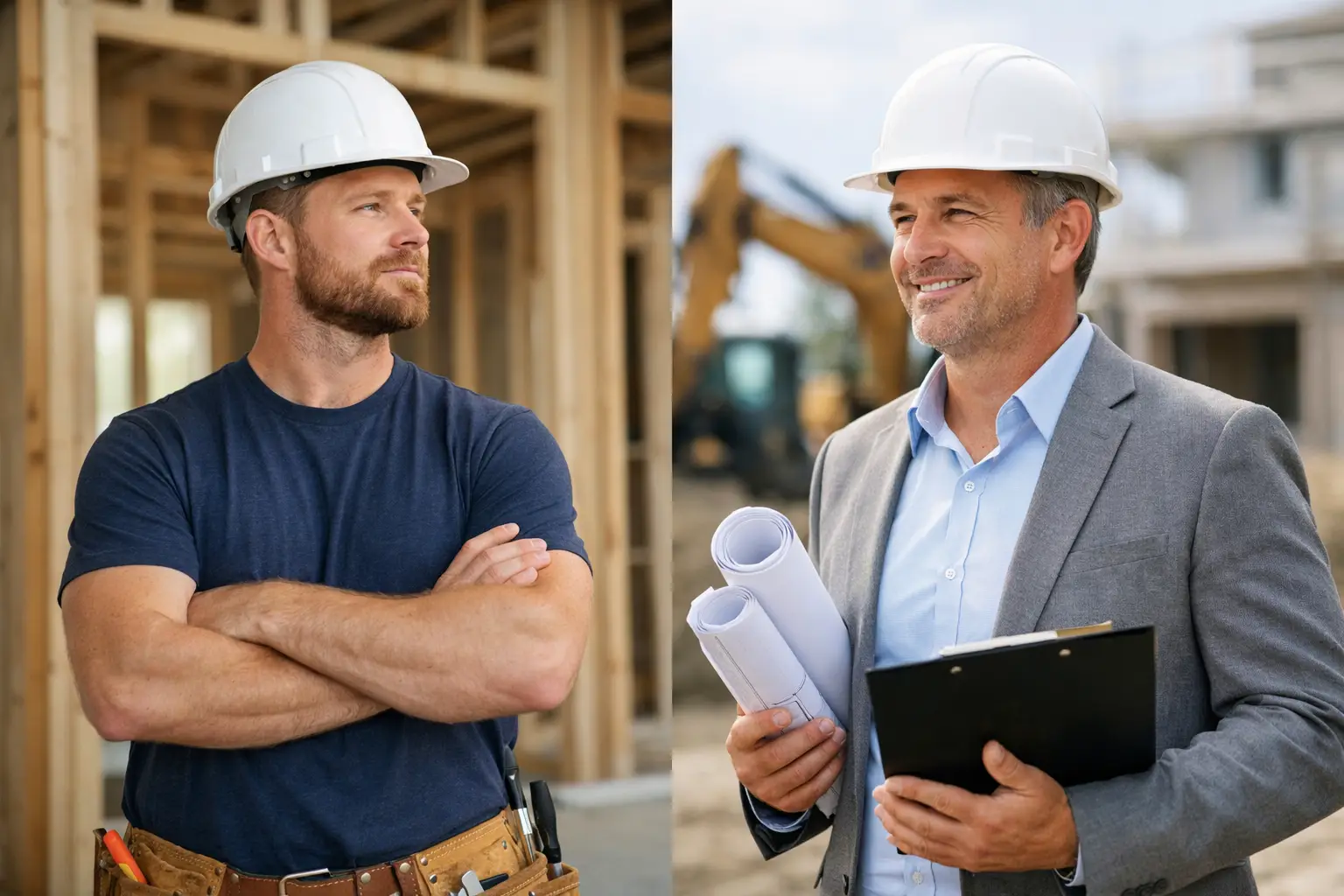
A kitchen addition, custom home, or commercial fit-out can involve dozens of decisions before the first wall comes down. The choice between a builder vs general contractor affects who guides those decisions, coordinates the work, and stands accountable for the finished result. While the terms are often used interchangeably, they can describe very different scopes of service.
For property owners in the Philadelphia area, the right fit depends less on the title alone and more on the project, the level of involvement you want, and whether you need help moving from an early idea to a completed space.
What a Builder Typically Does
A builder is commonly associated with creating a structure or a major part of one. For a new custom home, that may mean managing the full construction process from site preparation through final finishes. In residential remodeling, a builder may also take on additions, whole-home renovations, detached garages, outdoor living spaces, or structural upgrades.
The strongest builders bring construction knowledge to the table early. They can evaluate whether a concept is realistic for the site, identify structural considerations, and advise on materials, construction methods, and likely budget drivers. This is especially valuable when the vision is still taking shape.
That said, “builder” is a broad term. One builder may focus primarily on new homes, while another specializes in framing or shell construction. Some offer design-build services, maintaining one team from early planning through construction. Others work from completed architectural plans and focus on executing the build. Asking what is included is more useful than assuming every builder provides the same experience.
What a General Contractor Typically Does
A general contractor is responsible for organizing and managing the construction work. This includes hiring and scheduling subcontractors, ordering materials, coordinating inspections, tracking progress, maintaining site standards, and communicating with the owner.
On a major renovation, the general contractor is often the central point of accountability once plans are ready. Rather than a homeowner trying to coordinate electricians, plumbers, HVAC specialists, drywall crews, tile installers, painters, and inspectors, the general contractor manages those moving parts as one project.
A capable general contractor also protects the sequence of work. Electrical rough-ins need to happen before insulation and drywall. Cabinets must be measured and ordered at the right point to avoid delays. Structural work must be completed and inspected before finishes conceal it. Good project management is not simply keeping people busy. It is knowing which decisions, approvals, materials, and trades must come next.
Builder vs General Contractor: The Main Difference
The simplest distinction is this: a builder is often identified by what is being created, while a general contractor is identified by how the work is managed.
In practice, there is substantial overlap. A custom home builder may act as the general contractor for every home it builds. A full-service remodeling company may provide design, engineering coordination, estimating, construction, and interior finish selection under one roof. A general contractor may also describe itself as a builder because it performs large-scale construction work.
The difference becomes clearer when you look at the scope of responsibility. A builder may be the better description for a company that helps shape and construct a new home, addition, or major transformation. A general contractor may be the better description for a company hired to deliver established plans, coordinate trades, and manage the construction phase.
Neither title guarantees a particular level of craftsmanship, communication, or technical capability. The contract, team structure, process, and prior work matter far more.
When a Builder Is the Better Fit
A builder is often the right choice when your project needs construction expertise before the drawings are final. This is common with custom homes, significant additions, historic properties, and renovations where the existing conditions may change the plan.
Consider a family that wants to add a primary suite and expand the kitchen. They may know how they want the home to feel, but they may not know whether the rooflines can connect cleanly, where new plumbing can run, or how the addition should relate to the original architecture. A builder with design-build experience can help resolve those questions before they become expensive changes in the field.
Builders are also a strong fit for clients who want continuity. Instead of working separately with a designer, architect, estimator, contractor, and finish specialist, the owner has a coordinated team that can carry the vision from early concepts to final details. This approach can reduce handoffs and make it easier to keep design choices aligned with construction realities.
When a General Contractor Is the Better Fit
A general contractor can be the ideal partner when you already have complete plans, finish selections, and engineering documents. In that situation, the priority is disciplined execution: obtaining permits where required, pricing the work accurately, scheduling qualified trades, maintaining quality standards, and delivering the project according to the agreed scope.
This may apply to a commercial tenant improvement with an architect’s drawing set already in place. It can also apply to a homeowner working with an independent architect or interior designer who needs a construction partner to bring the plans to life.
A general contractor is not necessarily less involved or less skilled than a builder. The key question is whether the contractor has the experience to manage your specific type of project. A company that excels at cosmetic bathroom updates may not be the right team for a foundation issue, a complex historic restoration, or a multi-phase commercial build-out.
Do You Need Both?
Often, no. Hiring separate companies for building and general contracting can create blurred responsibility if the roles are not clearly defined. If a design decision creates a construction challenge, owners should not have to determine which party is responsible for solving it.
For complex projects, an integrated builder and general contractor can offer a more direct path. One team can coordinate design professionals, engineers, permitting, subcontractors, materials, site supervision, and closeout. That structure gives the client a clearer line of communication and gives the project team fewer places to pass responsibility.
At OSR Builders, this combined approach supports clients who need more than labor and scheduling. It provides a single point of contact across design-build planning, construction management, and the detailed finish work that makes a project feel complete.
Questions That Matter More Than the Title
Before choosing a construction partner, ask how the company will manage the actual work. The answers should be specific, not broad promises about quality or service.
Ask who will prepare the estimate and whether it is based on preliminary allowances or detailed selections. Ask who will be your day-to-day contact once construction begins. Ask how change orders are documented, priced, and approved. Ask how the team handles discoveries behind existing walls, under floors, or within older structural systems.
It is also wise to ask about licensing, insurance, subcontractor relationships, permitting experience, and site supervision. Requirements vary by municipality, and a qualified contractor should understand the local approval process that applies to your property. For larger projects, review the contract carefully so the scope, payment schedule, allowances, exclusions, project timeline, and warranty expectations are clear.
Finally, look at completed work similar to your own. A portfolio should show more than attractive finishes. Pay attention to craftsmanship at transitions, consistency of details, integration with the existing home, and whether the work reflects thoughtful problem-solving.
Choose the Team Built for Your Project
A small interior refresh may only require a specialized trade contractor. A straightforward renovation with completed plans may call for an experienced general contractor. A custom home, addition, structural renovation, or high-end whole-home transformation may benefit most from a builder that also manages the full contracting process.
The right partner should make the project feel more understandable, not more complicated. Look for a team that listens closely, explains the trade-offs honestly, respects the investment behind every decision, and takes ownership from the first conversation through the final walkthrough. That is how a well-built space becomes a place you can rely on for years to come.