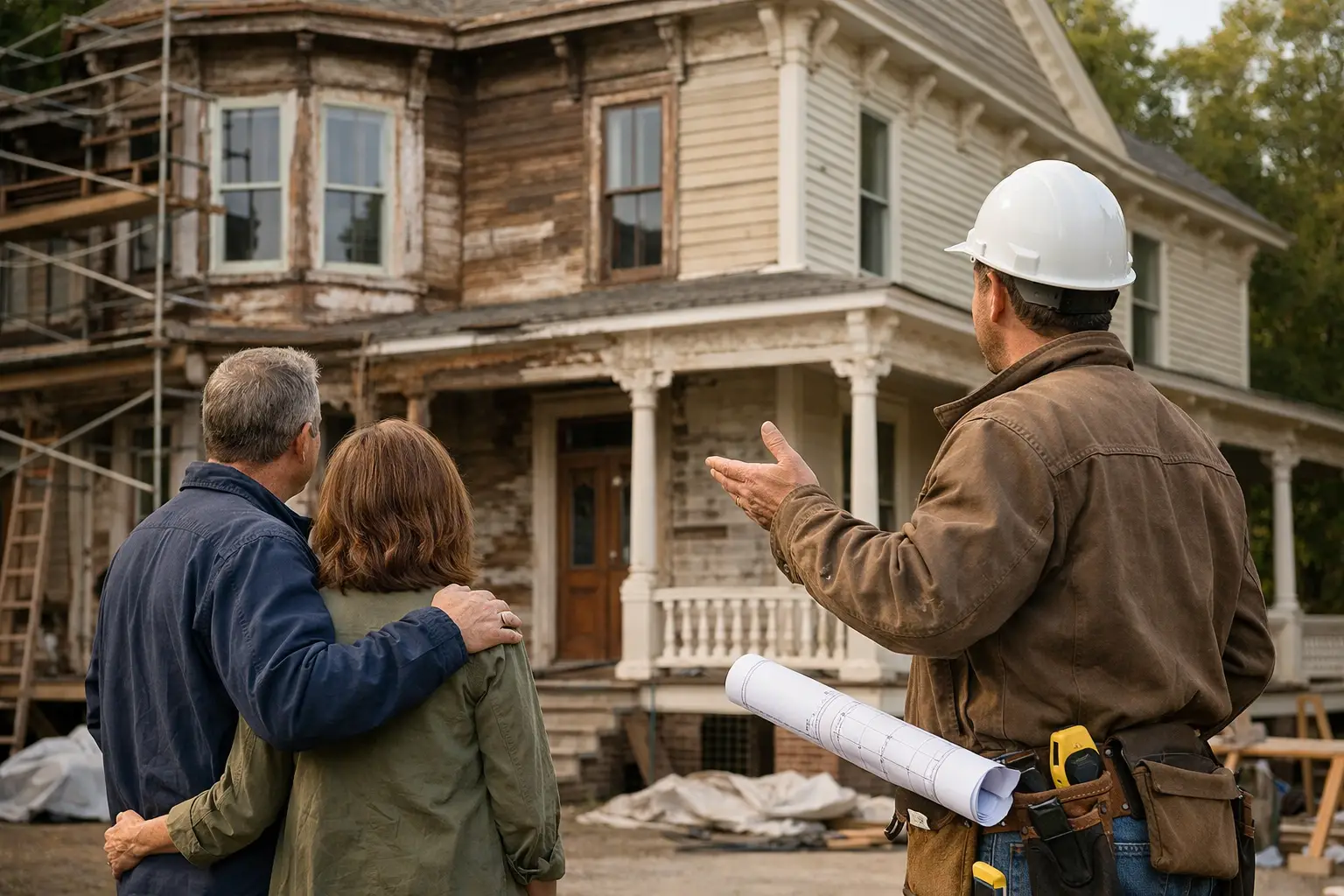
When you walk through an older home, the clues are everywhere – plaster with hairline cracks, trim profiles you cannot buy off the shelf, floors that slope a little, and details that give the house its identity. Hiring a historic home restoration contractor is not the same as hiring a standard remodeler, because the goal is not simply to make the home new again. The goal is to preserve what matters, improve what is failing, and make the house work better without erasing the character that made you fall in love with it.
That difference matters in the Philadelphia area, where many homes carry decades or even centuries of layered construction. A restoration project often involves more than finishes. It may include structural corrections, outdated systems, hidden water damage, poor past renovations, and code issues that only show up once work begins. Homeowners need a contractor who can respect the original architecture while still managing the realities of modern living.
What a historic home restoration contractor actually does
A true restoration contractor brings a different mindset to the job. In a newer home, the fastest route is often the right one. In a historic property, speed alone can create expensive mistakes. Original wood windows, old-growth framing, masonry walls, hand-crafted millwork, and plaster assemblies all respond differently than modern materials, and they should not be treated as disposable just because they require more labor.
That does not mean every old element must be saved at any cost. Good restoration work is grounded in judgment. Some components can be repaired beautifully. Others are too deteriorated, unsafe, or altered to justify preservation. The right contractor knows how to assess those conditions honestly and explain the trade-offs in plain language.
A strong restoration partner also coordinates more than carpentry. These projects regularly involve design decisions, permitting, specialty trades, structural planning, and finish selections that need to feel consistent with the home. That is why an integrated design-build approach can be especially valuable in historic work. Decisions about layout, materials, and engineering are connected from the start instead of being made in isolation.
Why historic homes require a different process
Older homes rarely reveal everything upfront. Walls may hide abandoned chimneys, undersized framing, knob-and-tube wiring, or earlier patchwork repairs. Existing conditions can be inconsistent from one room to the next. Even when the design looks straightforward, the construction phase can uncover surprises that affect scope, schedule, and budget.
That is not a sign the contractor missed something. It is part of responsible restoration planning. What matters is whether your contractor prepares you for those possibilities and has a process for addressing them without losing control of the project.
A thoughtful historic home restoration contractor begins with investigation, not assumptions. That may include a detailed site review, selective exploratory openings, structural evaluation, moisture assessment, and close examination of what is original versus what was added later. The more you understand before full demolition begins, the better your project decisions will be.
How to evaluate a historic home restoration contractor
Experience with older homes should be specific, not generic. Many contractors say they can handle historic properties because they have renovated older houses before. That is not the same as restoration expertise. Ask how they approach repair versus replacement, how they handle uneven or out-of-plumb conditions, and how they match existing details when part of the original work must be rebuilt.
You should also pay attention to how they talk about the home itself. A contractor focused only on demolition and modernization may miss what gives the property value. On the other hand, someone who romanticizes every old feature without discussing performance, safety, or budget may create a project that looks good on paper but becomes frustrating in practice.
The best conversations are balanced. You want a contractor who can say, with confidence, which elements are worth preserving, where modernization is necessary, and how those decisions affect cost and function. That blend of craftsmanship and accountability is what keeps restoration projects moving in the right direction.
The biggest mistakes homeowners make
One common mistake is choosing based on a low number before the full condition of the home is understood. Historic restoration is full of variables, and a bargain price can quickly disappear once hidden issues emerge. A more reliable investment is a contractor who builds a realistic plan, communicates allowances clearly, and explains where contingencies make sense.
Another mistake is replacing too much too quickly. Once original material is gone, it is gone. Old trim, doors, flooring, masonry, and plaster often have more life left in them than homeowners assume. Repair can be more labor-intensive upfront, but it frequently delivers a better visual result and preserves the authenticity that newer materials cannot fully replicate.
The opposite mistake is preserving everything indiscriminately. Some older systems simply no longer serve the home well. Electrical, HVAC, insulation, waterproofing, and structural upgrades may be necessary to make the house safe, efficient, and comfortable. Restoration should honor the past, but it also needs to support the way you live now.
Balancing character with modern performance
This is where good restoration work becomes highly personal. Some homeowners want period-correct details wherever possible. Others want the exterior and key architectural elements preserved while the interior supports a more contemporary lifestyle. Most fall somewhere in between.
A capable contractor helps you decide where historic authenticity matters most. It may be the front facade, stair hall, original windows, fireplace surrounds, or formal trim details. In other areas, there may be more flexibility to improve layout, add storage, update kitchens and baths, or introduce better lighting and mechanical systems.
That balance should never feel accidental. When restoration and renovation are planned together, the home reads as intentional rather than compromised. Original details feel respected, while new interventions feel integrated instead of forced.
Budgeting for restoration without losing control
Historic projects require disciplined budgeting because no two homes are exactly alike. Material matching, custom fabrication, specialty trade work, and exploratory repair can all affect cost. If your home has been altered multiple times over the years, untangling those layers may take more labor than expected.
That said, uncertainty does not mean chaos. A well-run contractor creates a budget framework that separates known work from possible conditions. They help you prioritize the scope so that essential repairs, preservation goals, and desired upgrades are aligned before construction gets too far ahead of the budget.
In our experience, homeowners feel more confident when they understand not just the price, but the reasoning behind it. Clear scope definition, transparent allowances, and proactive communication are especially important in restoration because project decisions often happen in real time as conditions are exposed.
Why craftsmanship and coordination matter just as much as vision
Historic restoration is detail work, but it is also management work. Beautiful results depend on coordination between design, framing, finish carpentry, masonry, painting, mechanical updates, and structural improvements. If those trades are not aligned, the final product can feel disjointed even when individual pieces are well executed.
That is why homeowners benefit from a contractor who can manage the full process from planning through completion. In a historic home, one decision affects another. Changing a wall may impact trim alignment. Restoring windows may affect insulation strategy. Structural reinforcement may affect finished surfaces. The more coordinated the team, the fewer costly disconnects along the way.
For property owners in older Pennsylvania neighborhoods, that coordination is not a luxury. It is what protects both the home and the investment behind it.
What the right result should feel like
A successful restoration should not make your home feel like a museum, and it should not make it feel stripped of its history. It should feel solid, coherent, and true to itself. Doors should close properly. Spaces should function better. Upgrades should support daily life without calling attention to themselves. And the architectural details that define the house should still be there, doing what they have always done – giving the home presence, warmth, and identity.
Choosing a historic home restoration contractor comes down to trust in judgment as much as trust in craftsmanship. The right team will know when to preserve, when to rebuild, and when to improve the original construction in ways that respect the house rather than compete with it. If you start there, you give your home the best chance to age gracefully for the next generation.