
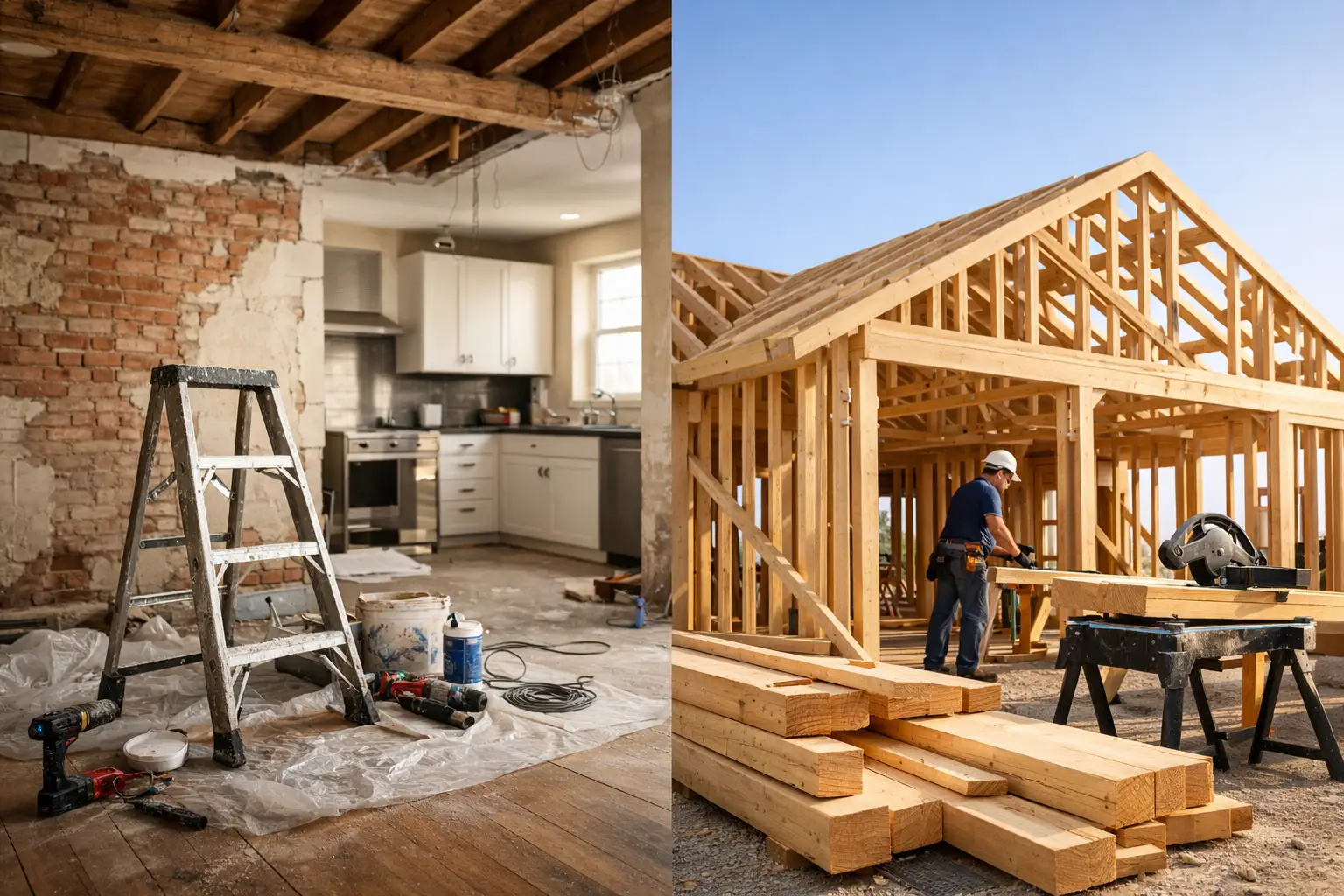
A home can reach a point where another cosmetic update simply is not enough. The layout may no longer serve your family, systems may be aging, or years of piecemeal changes may have left the property feeling disconnected. When that happens, the decision between renovation versus rebuilding becomes one of the most consequential choices a homeowner can make.
For property owners across the greater Philadelphia area, the right answer is rarely based on square footage alone. It depends on what is worth preserving, what needs to change, what the site allows, and how you want the home to perform for years ahead. A careful evaluation at the beginning can protect your investment, avoid unnecessary scope changes, and create a clearer path from design through construction.
Renovation Versus Rebuilding Starts With the Existing Structure
The strongest argument for renovation is usually that the home has good bones. A sound foundation, stable framing, a workable roofline, and a layout that can be improved without major structural changes can make a whole-home renovation a smart investment. This is especially true when a property has architectural character, a desirable location, or historic elements worth retaining.
In older Pennsylvania homes, original millwork, masonry, staircases, and exterior proportions often carry real value. Preserving those features while modernizing the kitchen, bathrooms, mechanical systems, insulation, and interior flow can deliver a home that feels current without erasing what made it special in the first place.
Rebuilding deserves serious consideration when the structure itself limits the project. Significant foundation concerns, widespread water damage, outdated framing, extensive settling, or multiple previous additions can turn a renovation into a series of expensive compromises. If the desired layout requires removing most interior walls, raising ceilings, relocating stairs, and reworking major systems, the difference between a major renovation and a new build may become smaller than expected.
The goal is not to assume that old means unsalvageable or that new construction is automatically better. It is to understand the condition of the house before committing to a design and budget.
When Renovation Is the Better Investment
A renovation is often the right path when your home already has a strong relationship to its lot and neighborhood. Perhaps it sits on a mature property with landscaping you value, has views that would be difficult to recreate, or fits naturally within an established streetscape. Renovating can allow you to improve the way the home lives while retaining those advantages.
It can also make sense when your needs are targeted. A family may need a more functional kitchen, a primary suite, an expanded living area, or a finished basement rather than an entirely new home. In these cases, a thoughtful addition or whole-home remodel can resolve the real problems without taking on the cost and duration of a complete rebuild.
Renovation is also a practical choice for homes with meaningful architectural details. Historic restoration and modern performance do not have to be at odds. With the right planning, a contractor can preserve period-appropriate elements while upgrading electrical capacity, plumbing, heating and cooling, windows, and insulation where appropriate.
That said, renovation costs are not always predictable at first glance. Opening walls can reveal concealed water damage, undersized structural supports, obsolete wiring, or conditions that do not meet current code. A responsible construction team accounts for these possibilities early, explains the risks clearly, and helps clients make decisions with realistic allowances rather than false certainty.
Renovation Works Best When the Plan Respects the House
The most successful renovations do not force a home into a shape it cannot support. They build on what is structurally sound and architecturally valuable, then make purposeful changes where they will have the greatest impact. A well-designed rear addition, for example, may create the open kitchen and family room a client wants while preserving the front portion of a classic home.
This approach requires coordination between design, engineering, selections, permits, and construction. When those pieces are handled as one process, homeowners are less likely to face disconnects between the drawing set, the budget, and the finished result.
When Rebuilding Gives You More Value
Rebuilding may be the better long-term decision when the existing home cannot reasonably support your goals. If you want a completely different floor plan, larger rooms, higher ceilings, better sightlines, and modern energy performance throughout, starting fresh can offer greater design freedom.
A new home also gives you the opportunity to place every major element intentionally. You can plan the kitchen around how your household entertains, create storage where it is actually needed, design bedrooms for privacy, and establish a connection between interior living areas and outdoor spaces. Mechanical systems, insulation, windows, structural components, and smart-home infrastructure can be integrated from the start instead of added around existing conditions.
For some homeowners, rebuilding is less about adding more space and more about eliminating compromises. A property may be in exactly the right location, but the house itself may be too small, poorly oriented, or too fragmented to justify preserving. In that situation, rebuilding allows the property to finally match the value of the site.
There are practical considerations, too. Demolition, site preparation, permits, utility coordination, and local zoning requirements all affect a rebuild. Setback rules, impervious coverage limits, floodplain conditions, and neighborhood regulations may influence what can be built and where. Before assuming a new home can be larger or positioned differently, those requirements need to be reviewed.
Rebuilding Is Not Always Faster or Simpler
It is tempting to view rebuilding as a clean slate with fewer surprises. It can reduce some of the unknowns hidden inside an old house, but it introduces its own decisions and responsibilities. The design process is more extensive, permitting can be more involved, and every finish and system must be selected.
The benefit is control. With an experienced design-build partner, that control can be managed through a clear preconstruction process that connects the scope, budget, schedule, and construction details before work begins.
Compare the Full Cost, Not Just the Construction Price
The financial comparison between renovation and rebuilding should extend beyond the initial proposal. A renovation may appear less expensive because it retains portions of the existing structure, but extensive structural work, hazardous-material remediation, utility upgrades, and unforeseen repairs can change the equation.
A rebuild may carry higher upfront costs for demolition and complete construction, yet it can reduce the need for major future upgrades. New systems are designed to work together, and a well-built home can offer improved efficiency, lower maintenance needs, and a layout that remains useful as your family changes.
The best comparison includes the cost of temporary housing if needed, design and engineering, permits, site work, utility changes, financing, and contingency planning. It should also consider the resale value of both options in your particular neighborhood. A home that is overbuilt for its location may not return the same value as a carefully scaled renovation or new build.
Budget-conscious execution does not mean choosing the lowest number on paper. It means developing a realistic scope, identifying the decisions that matter most, and making informed trade-offs before construction is underway.
Ask the Questions That Clarify the Right Path
Before deciding, begin with an honest conversation about how you use the house now and what is not working. Is the issue lack of space, poor circulation, outdated systems, insufficient natural light, or a combination of all four? Are there features you would regret losing? Is staying on the property essential?
Then evaluate the home professionally. Structural conditions, foundation performance, roof framing, moisture history, electrical service, plumbing, and HVAC capacity all influence the feasibility of a renovation. A concept plan without this information may look appealing, but it cannot provide a dependable basis for a major investment.
Finally, consider your timeline and tolerance for disruption. Large renovations can sometimes be phased, allowing homeowners to remain in part of the house. A rebuild generally requires moving out, but it may provide a more defined construction sequence once design and permitting are complete. Neither option is universally easier. The better fit depends on your household, your property, and the scale of the change you want.
Build the Decision Around Your Long-Term Vision
Whether you renovate or rebuild, the quality of planning will shape the experience as much as the construction itself. Homeowners need a team that can assess existing conditions, coordinate design and engineering, provide transparent budget guidance, and remain accountable through the final details.
At OSR Builders, that means treating the project as a shared process rather than a handoff between disconnected vendors. The right choice should leave you with more than a beautiful result. It should give your family a home that works with confidence, reflects your vision, and is built to serve the life you plan to live there.