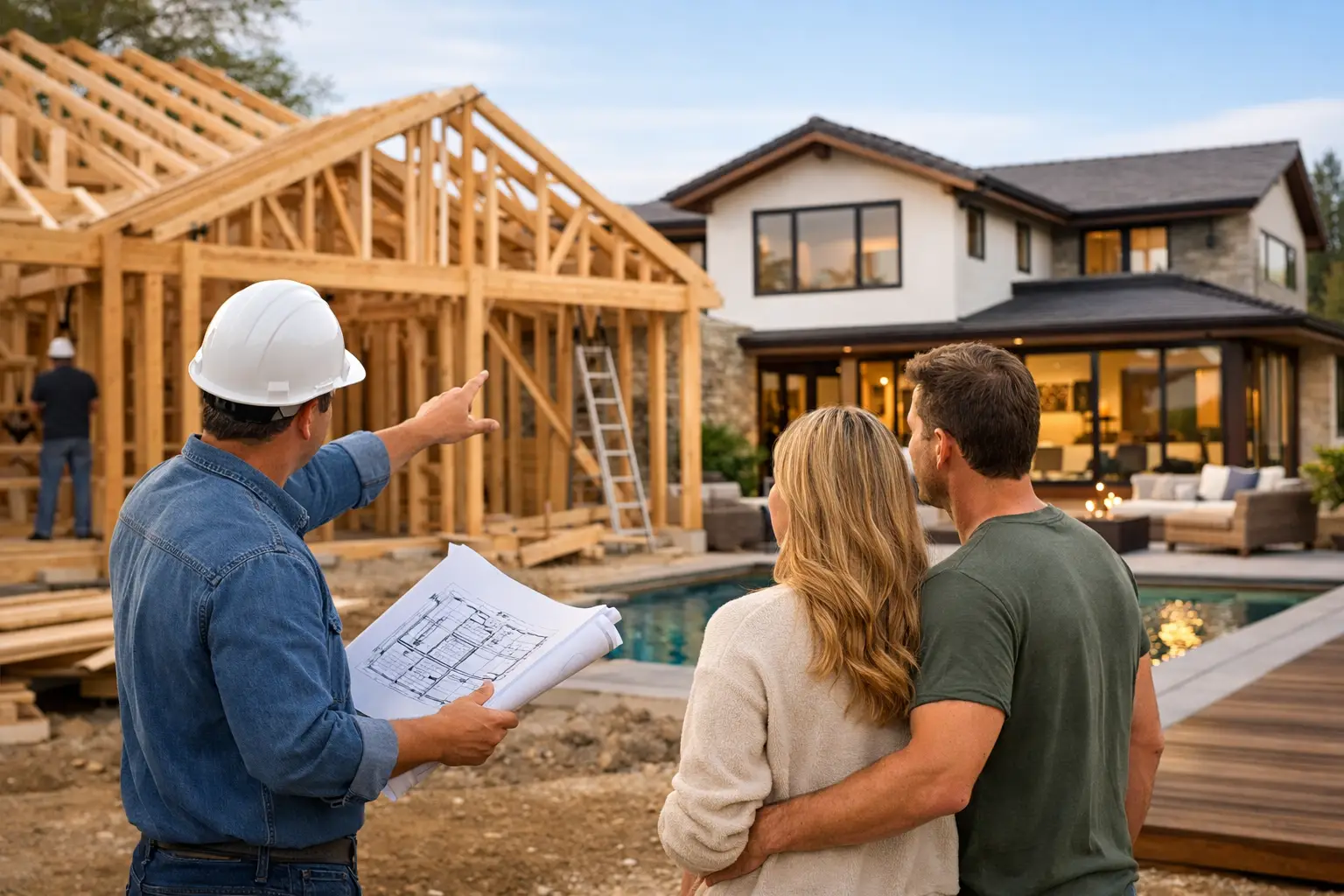
A custom home starts long before the first excavation. It begins when a homeowner realizes the house they want is not something they can pull off a shelf – not in the layout, not in the details, and not in how it needs to support real life for years to come. That is where custom home builders bring real value. They do more than construct walls and roofs. They help shape a home around the people who will live in it.
For many homeowners in the Philadelphia area, that decision comes after years of compromise. Maybe the kitchen never worked for the way the family gathers. Maybe storage is always tight, or the primary suite feels like an afterthought, or the lot itself calls for a home designed around views, grading, privacy, or outdoor living. A custom home is a chance to get those decisions right from the start. The builder you choose determines whether that opportunity feels organized and exciting or expensive and exhausting.
What custom home builders actually do
The phrase gets used broadly, but not every contractor operates the same way. Custom home builders are responsible for translating vision into a buildable plan and then managing the construction process so that the finished home reflects both design goals and practical realities. That means coordinating far more than framing and finishes.
A strong custom builder is thinking about site conditions, permitting, engineering, sequencing, structural requirements, material performance, labor coordination, budget control, and finish quality at the same time. If design is happening in one place and construction in another, those pieces can drift apart quickly. When the process is integrated, homeowners usually get better communication, clearer accountability, and fewer surprises.
That matters most on projects where details are not standard. A sloped property, a large addition of glass, aging infrastructure nearby, a historic context, or a highly specific interior design direction all create decisions that need experienced oversight. Custom work is not simply bigger work. It is more interconnected work.
Why custom home builders matter early in the process
One of the most common mistakes homeowners make is waiting too long to involve the builder. On paper, a design can look polished. In practice, it may introduce costs, structural complications, or constructability issues that could have been resolved much earlier.
When custom home builders are part of the conversation from the beginning, they can help align design ambitions with budget and schedule before the drawings are fully developed. That does not mean reducing the vision. It means protecting it. Sometimes a small shift in layout, roofline, span, window package, or mechanical location can preserve the look and function of a home while avoiding costly redesign later.
This is especially valuable for clients who want a high-end result but also want disciplined project management. Luxury does not have to mean waste. In many cases, the smartest custom homes are the ones where craftsmanship and budget awareness work together.
The difference between custom and semi-custom
Not every homeowner needs a fully custom process. Some are comfortable starting from an existing plan and tailoring key spaces. Others want a completely original home shaped around the lot, their lifestyle, and long-term goals. Neither approach is automatically better. It depends on priorities.
A semi-custom route can save time in design and permitting if the base plan already fits the site and most of the homeowner’s needs. A fully custom home offers more freedom, but it also asks for more decisions and more coordination. The trade-off is control. If the kitchen, mudroom, circulation, ceiling treatments, outdoor connections, and private spaces all need to function in a specific way, full customization often pays off.
Experienced builders help clients understand where customization matters most. Some features are worth investing in because they affect daily life every day. Others may carry a large price tag without improving how the home actually lives.
What to look for in custom home builders
Homeowners often focus first on style. That makes sense, but craftsmanship should be evaluated alongside process. Beautiful photos can show taste. They do not always show how a project was managed, how problems were handled, or whether expectations were clear throughout the build.
The best custom home builders communicate well, stay accountable, and bring structure to a complex process. They can explain how design decisions affect cost. They can anticipate sequencing issues before they become delays. They can manage trades in a way that protects both schedule and quality. Just as important, they are willing to collaborate. A custom home should feel personal, but it should not feel directionless.
Look for a builder who is comfortable discussing the less glamorous parts of the project. Ask how allowances are handled, how change orders are communicated, how site conditions are evaluated, and who serves as the client’s main point of contact. Ask what happens when a product lead time shifts or when an existing assumption no longer works in the field. A reliable process is often the clearest sign of a reliable result.
Design-build can make the process stronger
For homeowners who want one coordinated team, the design-build model is often a smart fit. Instead of separating designer, architect, contractor, and interior selections into disconnected tracks, design-build brings those conversations together. That tends to reduce miscommunication and speed up decision-making.
In a custom home, that coordination matters. Exterior architecture affects interior light. Interior design choices affect framing requirements, electrical planning, and HVAC distribution. Outdoor living features influence grading, drainage, and utility placement. If those decisions are made in isolation, the project can become reactive. If they are managed together, the project is more likely to stay cohesive.
That all-in-one approach is one reason many homeowners prefer working with a single team from concept through completion. Firms like OSR Builders are structured around that kind of collaboration, which helps clients move through design, budgeting, construction, and finishing with clearer communication and stronger continuity.
Budgeting for a custom home without losing control
Custom work carries a reputation for budget creep, and sometimes that reputation is earned. The problem is not customization itself. The problem is poor alignment between expectations, design development, and construction planning.
A well-run custom home project starts with honest budget conversations. Homeowners should understand what drives cost: square footage, site complexity, structural spans, window and door packages, finish level, mechanical systems, specialty spaces, and exterior features all have a major impact. The goal is not to strip away what makes the home special. The goal is to place money where it delivers the strongest return in comfort, function, durability, and appearance.
This is where builder guidance matters. There are times to invest heavily, such as in envelope performance, layout efficiency, and durable core materials. There are also times to value-engineer without sacrificing the overall design. Good custom builders know the difference, and they explain it clearly.
Local experience matters more than many clients expect
Building in the greater Philadelphia region comes with its own realities. Municipal requirements vary. Lot conditions vary. Older neighborhoods and established properties can introduce utility, drainage, or access considerations that are easy to underestimate. Homes also need to respond to the local climate, not just visually but in how they perform over time.
That is why local knowledge is not a bonus. It is part of risk management. Builders familiar with the region are better equipped to anticipate approvals, recommend suitable materials, and coordinate work in a way that respects both the property and the surrounding area. For homeowners planning a custom build on a challenging lot or near an existing structure, that experience can save time and protect quality.
A custom home should feel personal and well-resolved
The best custom homes do not feel complicated for the sake of being impressive. They feel clear. Rooms connect naturally. Storage is where it should be. Light arrives where it matters. Materials feel intentional. The house supports how the family lives now while leaving room for how life may change.
That kind of result rarely comes from making every decision independently. It comes from having the right team guide the process, ask the right questions, and keep the project grounded in both vision and execution. A custom home is a major investment, but it is also a daily experience. The builder’s job is to make sure those two realities stay aligned.
If you are considering a custom home, look for a partner who can bring design insight, construction discipline, and real accountability to the table. The right home is not just built to fit the lot. It is built to fit the life you want to live in it.