If you are weighing a custom home vs production home, you are probably not just comparing floor plans. You are deciding how much control you want, how involved you want to be, and what kind of investment makes sense for your family, your lot, and your long-term plans. That choice affects everything from design flexibility to budget predictability.
For homeowners in the greater Philadelphia area, this decision often comes down to more than price alone. Older neighborhoods, irregular lots, township requirements, architectural character, and the need for practical living space all shape what makes sense. A home should fit the way you live, not force you to work around someone else’s template.
Custom home vs production home: the core difference
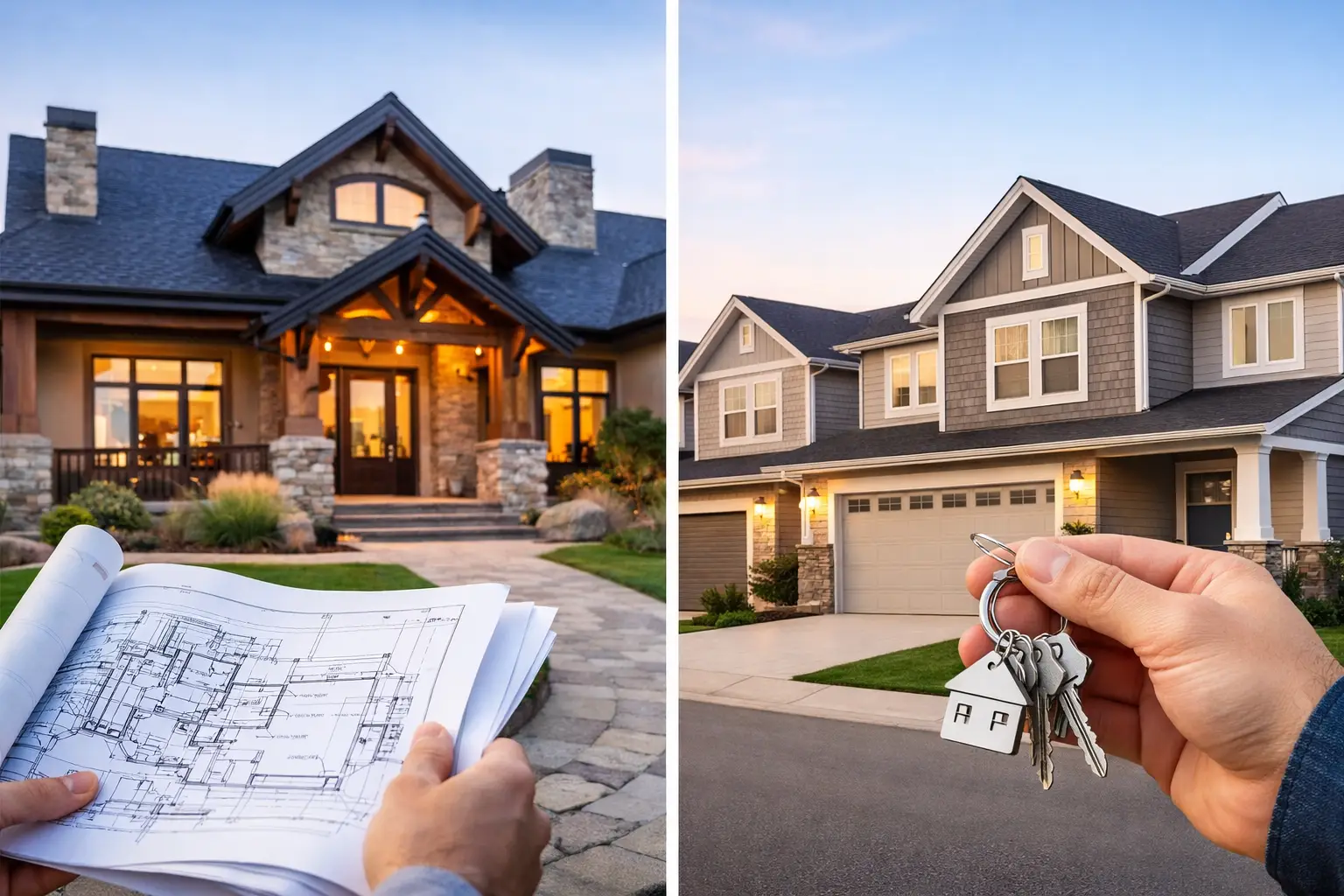
A production home is typically built by a developer or large-volume builder using a limited selection of floor plans, finishes, and options. These homes are usually built in planned communities, on builder-controlled lots, with systems and processes designed for efficiency and scale. The appeal is straightforward: faster timelines, a more standardized process, and pricing that can feel easier to understand upfront.
A custom home, by contrast, is built around the homeowner, the property, and the project goals. The floor plan can be fully original or heavily tailored. Materials, layout, elevations, interior details, and structural decisions are shaped by how you want the home to perform and feel. That comes with more decision-making, but it also creates a home that is more specific to your life.
Neither option is automatically better. The right choice depends on your priorities, your tolerance for compromise, and how important it is to get exactly what you want.
Where production homes make sense
Production homes work well for buyers who want a new home without managing a highly customized process. If you are comfortable choosing from a set menu of layouts and finishes, a production builder can offer a relatively efficient path to move-in. For some families, that structure is a relief. It narrows decisions and keeps the process moving.
There can also be real value in a repeatable system. Builders who construct the same models regularly often have established trade relationships, scheduling routines, and purchasing power that help control cost. In a neighborhood setting, production homes may also offer community amenities and a more uniform resale environment.
That said, convenience comes with limits. What looks customizable on paper may amount to a choice between a few cabinet colors, countertop packages, and optional room extensions. If your lot has unique grading issues, if you want a truly open kitchen designed around the way you entertain, or if you need specialized spaces like a first-floor guest suite, home office, or indoor-outdoor living connection, the production model can start to feel restrictive.
Where custom homes stand apart
A custom home gives you far more control over the finished result. That starts with the lot itself. If you already own land, are building on an infill parcel, or want a house designed to respond to topography, sunlight, setbacks, or views, custom is usually the better fit. Instead of forcing a standard model onto a site, the home is designed around the realities of the property.
That flexibility matters inside the home as well. A custom design can account for how your family actually lives now and how that may change over time. You may want wider circulation spaces, more natural light, a working pantry, aging-in-place features, or better separation between gathering areas and quiet rooms. These are not cosmetic preferences. They affect comfort, function, and long-term satisfaction.
Custom homes also tend to offer stronger alignment between architecture, interior design, and construction quality. When the process is well managed, details are considered early rather than treated as upgrades late in the project. That often leads to a more cohesive home and fewer compromises hidden behind polished marketing.
Cost is not as simple as sticker price
One of the biggest reasons buyers lean toward production homes is the perception that they cost less. In many cases, the base price is lower than a custom build. But base price and final cost are not the same thing.
Production home pricing often starts with a model and a standard package. As buyers add lot premiums, structural changes, finish upgrades, appliance packages, lighting, trim enhancements, and other selections, the number can move quickly. Some upgrades are optional in name only because the standard version may not meet the expectations of the buyer.
Custom homes usually require a larger upfront planning investment, and they can cost more per square foot depending on design complexity, site conditions, and material selections. But they also provide more control over where the money goes. You are not paying to retrofit a predesigned product into something it was never meant to be. You are allocating budget based on your priorities from the beginning.
The smarter question is not which path is always cheaper. It is which path gives you better value for the way you want to live. If you know you will want meaningful layout changes, higher-end finishes, or a design that responds to a challenging lot, custom may prevent expensive compromises.
Timeline and process expectations
Production homes generally move faster because the builder has a repeatable system. Plans are already drafted, materials are standardized, and the build team is accustomed to executing the same product repeatedly. If speed is the priority, production often has the advantage.
Custom homes take longer because more decisions are being made before and during construction. Design development, permitting, engineering, site coordination, and detailed selections all require time. That is not inefficiency. It is the cost of precision.
Still, a longer timeline is not necessarily a negative if the process is organized well. A thoughtful design-build approach can help reduce the friction that often comes from handing a project from designer to estimator to builder with too many disconnects in between. When planning, pricing, and construction coordination happen under one roof, homeowners usually gain better visibility into budget and feasibility earlier in the process.
The lot changes everything
In southeastern Pennsylvania, the lot can be the deciding factor. A flat parcel in a new subdivision is one thing. A sloped site, a wooded property, a narrow infill lot, or a site with township restrictions is another.
Production builders are usually set up to build on lots they control and understand. If your land presents drainage concerns, setback limitations, utility challenges, or preservation requirements, you may need a team that can solve problems rather than simply apply a standard plan. This is where custom construction has a clear advantage.
A well-designed custom home can turn site constraints into strengths. Grade changes can create walk-out basements. Orientation can improve daylight and energy performance. Outdoor living spaces can be integrated instead of added as an afterthought. Those decisions require planning and technical coordination, but they often produce a far better result.
Resale value and long-term livability
Some buyers worry that a custom home can become too personal, while others assume a production home is safer for resale. There is some truth on both sides, but the outcome depends on the quality of the decisions.
A custom home with thoughtful proportions, durable materials, strong circulation, and broad lifestyle appeal can hold value extremely well. The key is not to confuse custom with overly niche. Good custom design solves real living needs without creating features that only one buyer would appreciate.
Production homes can perform well in resale too, especially in desirable communities with consistent demand. But if the home lacks distinction, privacy, lot quality, or meaningful upgrades, it may compete heavily against similar properties nearby. In that case, resale value becomes tied more closely to the broader neighborhood inventory.
For many homeowners, the better lens is long-term livability. If you plan to stay for years, daily function matters as much as future marketability. The right kitchen layout, storage plan, bedroom configuration, and outdoor connection can have more impact on your quality of life than a short-term pricing advantage.
How to choose between a custom home and a production home
If you want a streamlined purchase, can work within a set group of plans, and are building in a planned community, a production home may be the right fit. It offers predictability and a more packaged buying experience.
If you want a home shaped around your land, your priorities, and the way you actually live, custom is usually the stronger path. It is especially worth considering if design matters to you, if your lot is unique, or if you care about having one coordinated team guide the project from concept through completion.
This is where experience and process matter as much as craftsmanship. A builder should not only construct well but also help you understand trade-offs clearly. That means discussing budget honestly, identifying where customization adds true value, and protecting the project from avoidable surprises. At OSR Builders, that kind of accountability is central to how complex residential projects get done well.
The best choice is the one that matches your goals, not the one that sounds simplest on paper. A home is too significant an investment to approach as a standard package if your life, lot, and expectations are anything but standard.