
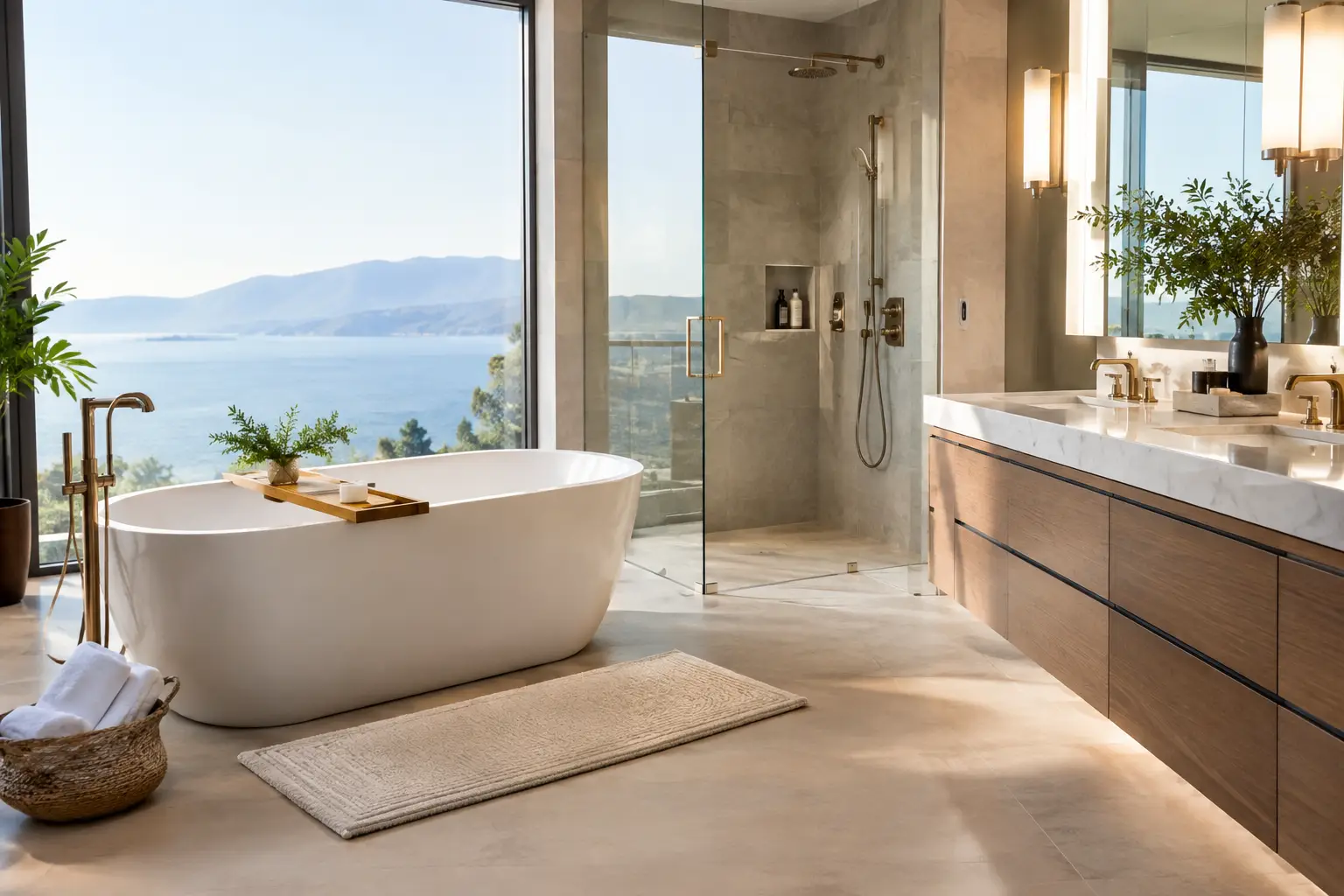
A well-designed primary bathroom changes the rhythm of a home. It should make busy mornings easier, provide a quiet place to reset at the end of the day, and hold up beautifully under daily use. The best luxury bathroom features are not simply the most expensive additions. They are the details that combine comfort, smart planning, quality materials, and lasting craftsmanship.
For homeowners planning a substantial bathroom renovation in the greater Philadelphia area, the right priorities depend on the room’s footprint, the home’s plumbing and electrical systems, and how the space is used. A feature that feels essential in a spacious primary suite may not make sense in a compact hall bath. The goal is a bathroom that feels personal, practical, and built with intention.
1. A Walk-In Shower Designed Around Daily Use
A generous walk-in shower is often the centerpiece of a luxury bathroom remodel. The strongest designs go beyond size. They account for where the controls sit, how the door swings, where towels are stored, and whether the room needs to accommodate aging in place.
A curbless entry creates a clean, open appearance and can improve accessibility, but it requires precise framing, waterproofing, and floor slope. This is not an area for shortcuts. Proper drainage and a carefully installed waterproofing system protect the structure beneath the finished tile and help prevent costly moisture problems later.
Consider a built-in bench, recessed niches sized for the products you actually use, and a handheld shower fixture in addition to a fixed showerhead. Thermostatic controls can maintain water temperature when another fixture is running elsewhere in the house. These are quiet upgrades, but they make the shower noticeably better every day.
2. Heated Floors That Make Cold Mornings Better
Radiant floor heat is one of the best luxury bathroom features because its value is immediate and practical. Tile and stone are durable, attractive bathroom finishes, but they can feel cold underfoot during a Pennsylvania winter. A properly installed electric floor-warming system brings comfort to the room without requiring a major change to the home’s heating system.
The system should be considered early, before final floor heights, transitions, and vanity placement are set. It works best when paired with a programmable thermostat, allowing homeowners to warm the floor before the household wakes up and reduce energy use when the room is not in use.
Radiant heat is not a replacement for proper room heating and ventilation. In larger bathrooms, it should be part of a coordinated plan that also considers insulation, HVAC supply, and exhaust capacity.
3. A Freestanding Tub With the Right Clearance
A freestanding tub brings a sculptural, hotel-quality presence to a primary bathroom. It can also become an underused fixture if it is selected solely for appearance. Before choosing a tub, consider who will use it, how often, and whether there is enough room to move around it comfortably.
The best placement gives the tub visual breathing room while keeping access to cleaning and plumbing practical. Water weight matters as well. A large soaking tub can add significant load when filled, especially in an older home. Reviewing the floor structure during design is a responsible step, particularly in second-floor renovations or historic properties.
For households that prefer quick showers to long baths, a larger shower or expanded vanity may be a better investment. Luxury is not about adding every possible fixture. It is about spending square footage where it will make the biggest difference to your family.
4. Custom Vanities and Storage That Reduce Clutter
A bathroom can have beautiful tile, polished fixtures, and excellent lighting, yet still feel unfinished if daily essentials have nowhere to go. Custom or semi-custom vanities allow the storage plan to match the people using the room.
Deep drawers are generally more functional than oversized cabinet doors for toiletries, grooming tools, and personal care products. Dedicated outlets inside drawers or cabinets can keep electric toothbrushes, razors, and hair tools off the countertop. A linen cabinet, recessed medicine cabinet, or vanity tower may be more valuable than an extra decorative feature when storage is limited.
Material selection is equally important. Bathrooms experience heat, humidity, splashes, and frequent cleaning. Cabinet construction, durable finishes, well-made hardware, and a countertop that suits your maintenance preferences will serve the space better than a finish chosen only for a showroom look.
5. Layered Lighting at Every Mirror
Good bathroom lighting is a construction and design decision, not an afterthought. A single ceiling fixture casts shadows, especially when someone is standing at the vanity. Layered lighting creates a more useful and more welcoming room.
Vertical sconces at both sides of the mirror provide balanced light for shaving, makeup, and skincare. Recessed ceiling lights can brighten the overall room, while a decorative fixture adds character over a tub or in an open area. Dimmers let the bathroom shift from a bright morning workspace to a calmer evening setting.
Electrical planning should also address outlet locations, charging needs, and code requirements. If a mirror includes integrated lighting or defogging features, the rough electrical work needs to be coordinated before walls are closed. This early planning avoids compromises after finishes have been selected.
6. Natural Stone and Tile Used With Purpose
Stone, porcelain, ceramic, and handmade tile each bring a different character to a luxury bathroom. The right choice is not always the most dramatic option. It is the one that fits the home’s architecture, the desired maintenance level, and the scale of the room.
Large-format porcelain can create a clean, expansive look with fewer grout lines. Natural stone has depth and variation that cannot be duplicated, though it may require sealing and more attentive care. Textured tile can add interest underfoot, but the finish must still be comfortable, cleanable, and appropriate for wet areas.
Consistency in installation matters as much as the material itself. Clean layout lines, balanced cuts, well-placed transitions, and properly matched grout create the polished result homeowners expect from a high-end remodel. Tile should frame the room’s architecture rather than compete with it.
7. Better Ventilation, Hidden in Plain Sight
Ventilation is one of the least glamorous upgrades and one of the most important. A quiet, properly sized exhaust fan helps control humidity, protects finishes, and reduces the risk of peeling paint, mildew, and moisture-related damage.
For a larger bathroom, a single undersized fan may not be enough. Fan capacity, duct routing, and exterior termination should be evaluated as part of the project. A humidity sensor or timer switch can help ensure the fan runs long enough after a shower, even when everyone is rushing out the door.
This is where full-project coordination makes a difference. Electrical, mechanical, plumbing, framing, waterproofing, and finish work all need to support the same plan. A beautiful bathroom should perform as well behind the walls as it does in photographs.
8. Water-Smart Fixtures With a Premium Feel
Luxury fixtures should feel substantial, operate reliably, and complement the overall design. They should also respect water use. Modern shower valves, efficient toilets, and quality faucets can reduce consumption without making the experience feel restricted.
Finish selection deserves thoughtful attention. Chrome is classic and easy to coordinate, while brushed nickel, polished nickel, matte black, brass, and bronze can create a more tailored look. Keep in mind that some finishes show water spots or fingerprints more readily than others. A finish that looks striking in a sample may require more maintenance in a high-use family bathroom.
Reliability matters more than novelty. Selecting fixtures with serviceable components and readily available replacement parts helps protect the investment long after construction is complete.
9. A Private Water Closet When the Layout Supports It
In a shared primary bathroom, a separate water closet can improve privacy and make the room easier for two people to use at once. It is especially helpful when one person is getting ready while another needs the toilet area.
This feature requires adequate square footage, proper clearance, ventilation, and a door location that does not disrupt the room’s flow. In a smaller bathroom, enclosing the toilet can make the entire room feel tighter. Sometimes a partial privacy wall offers a better balance between separation and openness.
10. Technology That Solves a Real Problem
Thoughtful technology can add convenience without turning the bathroom into a collection of gadgets. Heated towel bars, smart shower controls, integrated bidet seats, leak detection devices, and lighted mirrors can all improve the daily experience when selected for a clear reason.
The key is restraint. Technology should be easy to operate, compatible with the home’s systems, and supported by accessible service options. A few dependable upgrades usually age better than a room filled with features that are difficult to repair or quickly become dated.
A luxury bathroom earns its place in the home through the details you feel every day: warm floors, organized storage, comfortable lighting, reliable water control, and finishes installed with care. When the design and construction teams plan these decisions together from the start, the result is a room that reflects your vision while working hard for your household for years to come.