A finished basement can become the most flexible room in the house – a family lounge, guest suite, home gym, office, playroom, or entertaining space. But the floor has to do more work below grade than it does anywhere else. The best basement flooring options account for moisture, temperature swings, slab conditions, daily use, and the way you want the room to feel when the project is complete.
For homeowners in the greater Philadelphia area, that means looking beyond color samples. A floor that looks right in a showroom may not be right for a concrete slab with elevated moisture or a basement that runs cool through winter. A thoughtful flooring decision starts with the structure, then brings in the comfort and design details that make the space feel like part of the home.
Start With the Basement, Not the Finish Sample
Before selecting a material, evaluate the conditions beneath it. Concrete is durable, but it is also porous. Moisture vapor can move through a slab even when there has never been visible water in the basement. Older homes may also have uneven concrete, minor cracks, low ceilings, or foundation details that affect how much floor height is available.
A contractor should inspect for water intrusion, check the slab for moisture, and identify whether leveling or crack repair is needed. If drainage, grading, foundation repairs, or a sump system need attention, those items come first. Flooring is a finish layer, not a solution for an active moisture problem.
The room’s intended use also matters. A gym floor needs impact resistance and easy cleanup. A guest suite benefits from warmth underfoot. A basement bar or entertaining area may call for a durable, design-forward surface that handles spills without concern. The right choice is rarely the same for every basement.
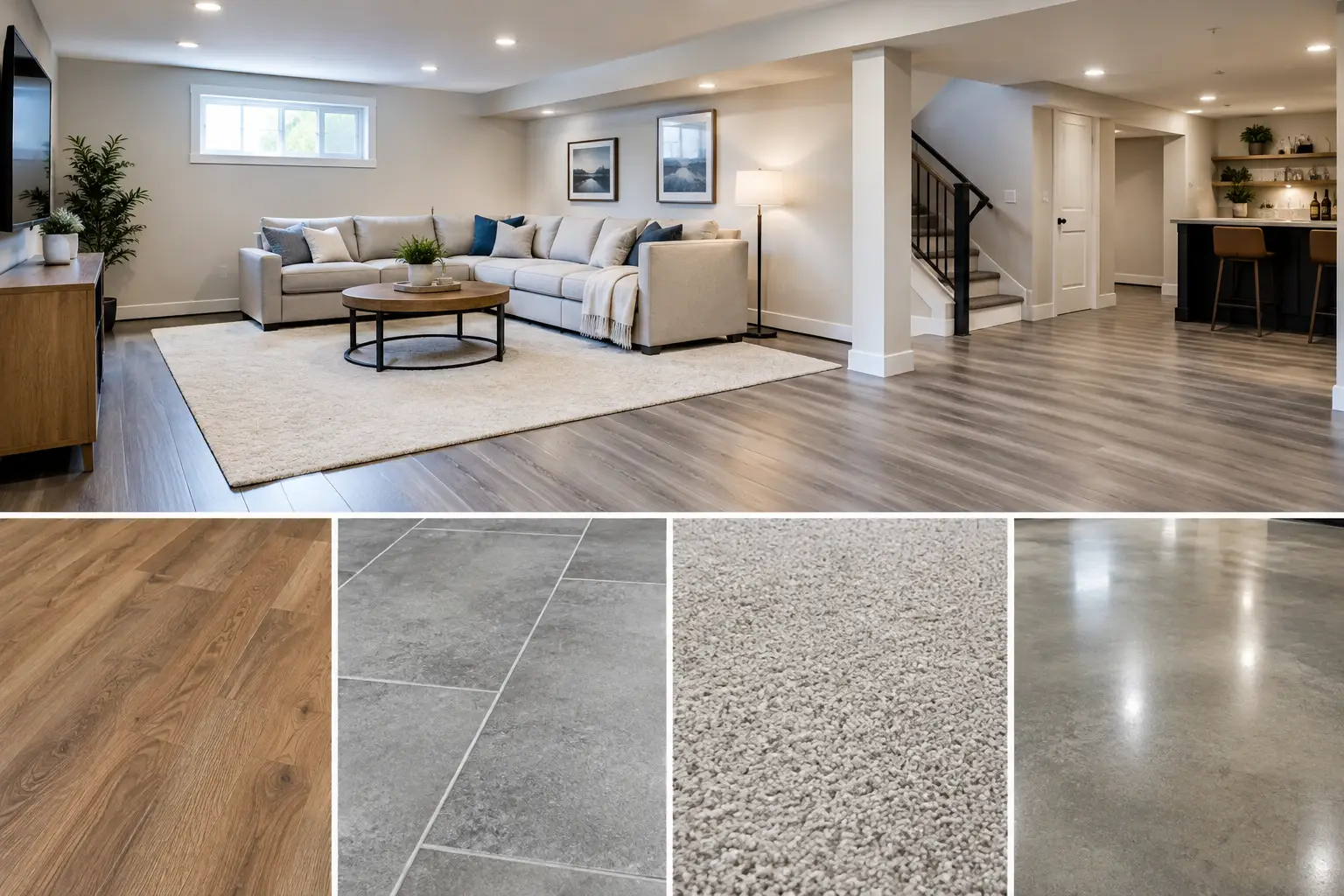
Basement Flooring Options That Perform Well Below Grade
Luxury vinyl plank and luxury vinyl tile
Luxury vinyl plank, often called LVP, is one of the most practical choices for finished basements. It is water-resistant, durable, comfortable compared with bare concrete, and available in convincing wood, stone, and tile visuals. Its click-lock installation can also make it a strong fit when a floating floor is appropriate for the slab condition.
LVP works especially well for family rooms, playrooms, home offices, and multipurpose spaces. It gives homeowners the warm appearance of hardwood without the same sensitivity to below-grade moisture. Quality varies considerably, however. A thicker wear layer, stable core, and well-prepared subfloor make a noticeable difference in how the finished floor performs over time.
Luxury vinyl tile offers many of the same benefits in tile and stone looks. It can be a smart choice for basement bathrooms, wet bars, and laundry areas where a more tailored finish is desired without installing traditional ceramic tile throughout.
Porcelain or ceramic tile
Porcelain tile is among the most moisture-resistant flooring materials available. It is an excellent fit for basements with a history of humidity, spaces that open to the outdoors, basement bathrooms, and areas where durability is the priority. Properly installed tile can handle heavy foot traffic, pets, spills, and frequent cleaning with confidence.
The trade-off is comfort. Tile can feel cold and hard over concrete, particularly in Pennsylvania winters. Area rugs can help in living spaces, while radiant floor heating can provide a more luxurious solution when the project scope and budget allow. Tile installation also requires a flat, properly prepared surface, so slab repair and leveling should be part of the planning conversation.
Engineered hardwood
For homeowners who want a refined, continuous look between the main level and a finished lower level, engineered hardwood can be considered in the right basement. Unlike solid hardwood, engineered boards are built in layers, which gives them better dimensional stability. That said, engineered wood is not immune to moisture damage.
This option works best in a dry, conditioned basement with no active water concerns and a proper moisture-control system beneath the floor. Product selection and installation method matter. Some engineered floors are rated for below-grade use, while others are not. Choosing a product simply because it resembles the upstairs flooring can create an expensive problem if the basement conditions do not support it.
Carpet and carpet tile
Carpet remains a strong choice for spaces where comfort is the goal. It softens a basement family room, media room, or bedroom and adds warmth that hard surfaces cannot match. Modern low-pile and stain-resistant products can be practical for active households, especially when paired with a quality moisture-resistant pad.
Carpet tile deserves consideration in playrooms, gyms, and casual entertainment areas. If one section becomes stained or damaged, individual tiles can often be replaced instead of removing the entire floor. It is still important to remember that carpeting is not the first choice for a basement with unresolved moisture concerns. Even a minor water event can lead to odors, mold concerns, and replacement costs.
Epoxy and polished concrete
For a modern, industrial, or highly functional basement, epoxy-coated or polished concrete can be an excellent solution. These finishes preserve the durability of the slab while creating a clean, intentional look. Epoxy is particularly useful for workshops, hobby rooms, utility spaces, and home gyms where easy maintenance is a priority.
Polished concrete has a more architectural feel and can work beautifully in contemporary basement renovations. Both options are hard underfoot, so they may be less inviting for a primary lounge area unless softened with rugs and furnishings. Surface preparation is critical, since cracks, moisture pressure, and poor adhesion can affect the long-term finish.
Flooring Choices That Need Extra Caution
Solid hardwood is generally not recommended for a basement. Natural wood expands and contracts with changes in humidity, and moisture moving through concrete can cause cupping, gaps, and damage. Even a well-maintained basement remains a more demanding environment than an above-grade living area.
Traditional laminate flooring can also be risky unless the specific product is rated for below-grade installation and the moisture barrier is carefully detailed. Many laminate products are vulnerable at their seams and edges. A small plumbing leak or water intrusion event may require full replacement.
Natural materials such as bamboo and cork can offer attractive design possibilities, but they need a carefully controlled environment and a well-executed moisture-management strategy. They are not default choices for every basement renovation.
The Subfloor Is Part of the Flooring Decision
The finished surface gets the attention, but the assembly beneath it often determines whether the floor feels solid, warm, and durable. Depending on the material and slab condition, a basement may benefit from a vapor barrier, a floating subfloor panel system, or a low-profile insulated underlayment.
These layers can help separate the finish floor from the concrete, reduce the cold feeling underfoot, and accommodate minor imperfections. They also add height. In a basement with low ceilings, every fraction of an inch should be considered alongside lighting, soffits, ductwork, and door clearances.
A well-coordinated renovation plan prevents one decision from creating problems elsewhere. For example, a raised floor assembly may improve comfort but require adjustments at stairs, doors, bathroom transitions, or built-in cabinetry. This is where design and construction coordination pays off.
Match the Floor to How Your Family Will Use the Space
A single basement can contain several flooring types without looking disconnected. A tiled bathroom, LVP family room, carpeted media zone, and durable gym surface can each serve their purpose while sharing a consistent color palette and design direction.
For a high-traffic family basement, LVP often offers the best balance of resilience, appearance, and budget control. For a lower level designed around entertaining, porcelain tile or high-quality LVP can support a polished look with little maintenance. For a quiet guest suite or media room, carpet or engineered hardwood may be appropriate if moisture conditions are verified and controlled.
The most successful basement renovations do not force a single material into every room. They build around how the household actually lives, from muddy shoes at the exterior door to movie nights, sleepovers, workouts, and holiday gatherings.
Plan for Long-Term Value, Not Just Installation Cost
Flooring costs include more than the material itself. Slab preparation, moisture mitigation, underlayment, removal of existing finishes, trim work, transitions, and installation all shape the investment. Choosing the least expensive product without addressing the substrate can lead to premature wear or replacement.
At OSR Builders, we approach basement renovations as complete living environments rather than a collection of finish selections. That means considering the condition of the home, the client’s goals, and the construction details that support a finished result built to last.
The right basement floor should disappear into daily life in the best possible way: comfortable underfoot, dependable through the seasons, and well suited to the memories your family will make in the room.