A basement usually tells the truth about how a home is working. If the main floor feels crowded, if storage has started taking over, or if guests have nowhere comfortable to stay, the lower level often becomes the obvious place to expand. The best finished basement renovation ideas do more than make that space look better. They solve daily problems, add flexibility, and create square footage that feels fully connected to the rest of the home.
In the greater Philadelphia area, that matters even more. Many homes have basements with real potential, but the right approach depends on ceiling height, moisture conditions, mechanical layout, and how your family actually lives. A well-planned renovation should feel intentional, not like an afterthought with drywall and a couch.
What makes finished basement renovation ideas work
The strongest basement designs start with use, not finishes. Before selecting flooring, paint colors, or millwork details, it helps to answer a simple question: what do you need this level to do that your home is not doing well right now?
For some households, the answer is overflow living space. For others, it is privacy for guests, room for teenagers, a dedicated office, or a place to entertain without taking over the kitchen upstairs. Once the purpose is clear, design decisions get easier and the finished space tends to hold its value better over time.
There is also a practical side to basement planning that should never be skipped. Lighting, insulation, egress, sound control, HVAC distribution, and moisture management all affect whether the space feels comfortable year-round. A beautiful basement that feels cold, dark, or damp will never perform the way it should.
Finished basement renovation ideas for real everyday use
A family room that takes pressure off the main floor
One of the most reliable choices is a comfortable family room with built-in storage, media integration, and durable finishes. This works especially well for growing families who need a second place to gather, watch movies, or give kids room to spread out.
The difference between an average basement lounge and one that feels finished usually comes down to proportion and detail. Recessed lighting, layered task lighting, thoughtful trim, and cabinetry that hides toys, games, and electronics can make the room feel more like an extension of the home than a separate zone below it.
A guest suite with privacy and purpose
If you regularly host family or want better accommodations for long-term visitors, a basement guest suite can be a smart investment. A bedroom, full bath, and small sitting area create privacy for guests and free up the rest of the house.
This idea requires careful planning around code, especially for egress and ceiling height. But when done correctly, it becomes one of the most versatile upgrades in the house. It can serve visiting relatives now and adapt later for older children, live-in support, or multigenerational living.
A home office that actually feels separate
A basement office can be a strong solution for homeowners who work from home and need focus without sacrificing a bedroom upstairs. The key is not just placing a desk in an extra room. It is creating the right lighting, acoustic control, and background conditions for video calls and daily concentration.
If the basement has limited natural light, this is where design matters. Warm layered lighting, glass partitions where appropriate, and clean built-ins can keep the office from feeling enclosed. For many professionals, separation from household traffic is worth far more than simply adding another generic room.
A home gym with the right foundation
A gym is one of the most requested basement uses, and for good reason. The lower level offers privacy, noise separation, and enough room for cardio equipment, strength training, or yoga. But the success of this idea depends heavily on flooring, ventilation, and layout.
Rubber flooring may be practical in one area, while another section benefits from a cleaner finished surface for stretching or mobility work. Ceiling height is another real factor. If overhead movement is limited, the equipment plan needs to reflect that early.
A playroom that can evolve over time
For younger families, a basement playroom can restore order to the rest of the house. Open floor area, built-in shelving, craft stations, and easy-clean materials help contain activity without making the room feel temporary.
The smartest version of this concept leaves room for change. Children outgrow playrooms, so the design should be flexible enough to become a hangout room, study area, or media space later. Good built-ins and durable finishes help that transition happen without another full renovation.
Basement ideas that add entertainment value
A bar and lounge for easy hosting
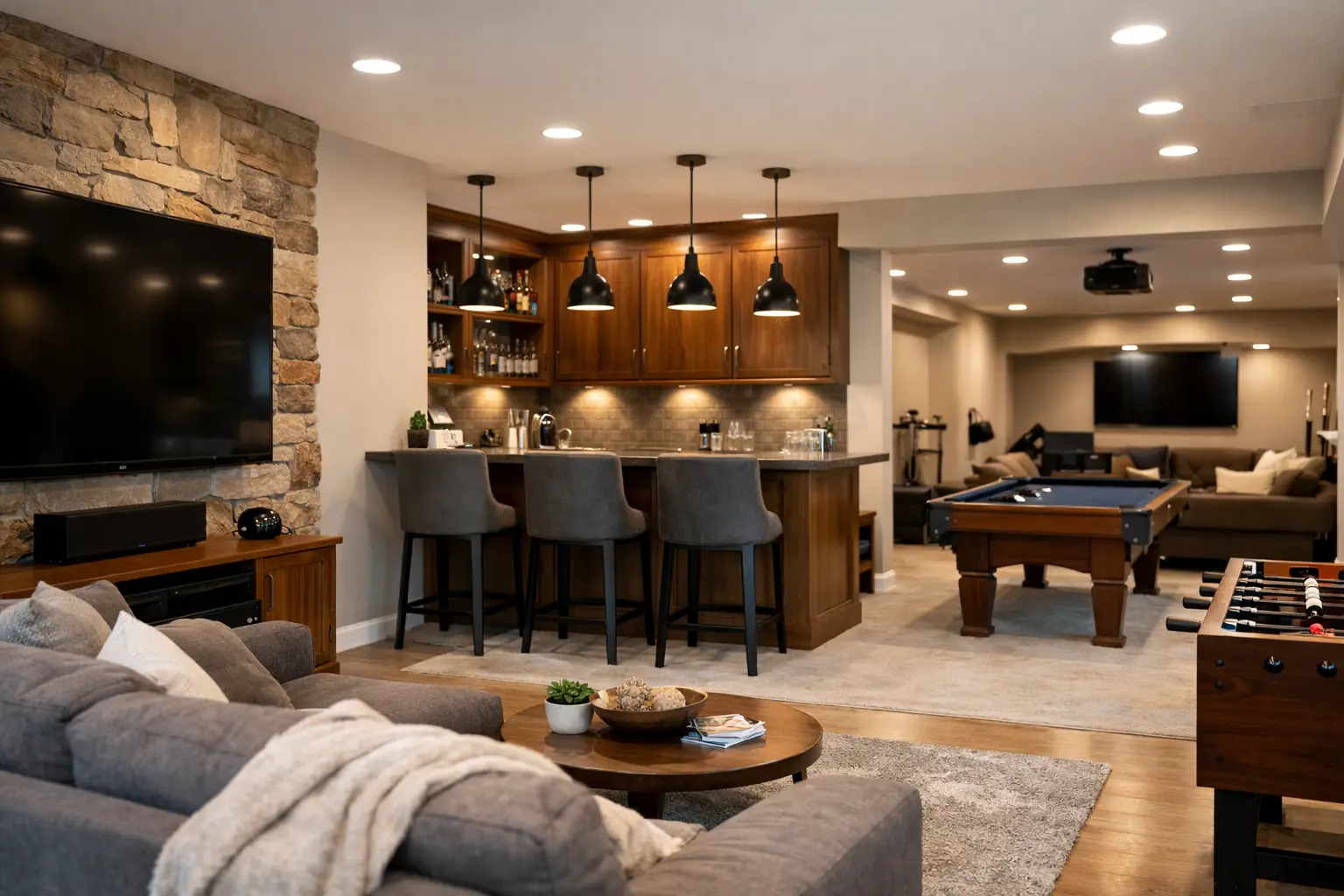
For homeowners who enjoy entertaining, a basement bar and lounge creates a space that feels relaxed and separate from the main living areas. This can be as simple as a beverage center with custom cabinetry or as detailed as a full wet bar with seating, wine storage, and statement finishes.
It works best when the room still supports everyday use. In other words, the bar should not dominate the entire basement unless entertaining is truly the top priority. A balanced layout often performs better, with lounge seating, open circulation, and enough flexibility for gatherings of different sizes.
A dedicated media room
A basement naturally suits movie nights because it has less daylight to compete with screens. But a true media room is about more than a large television. Sound insulation, speaker placement, furniture spacing, and lighting control all shape the experience.
This idea is ideal for families who use entertainment as a regular part of home life. If your goal is a cinematic feel, the room should be designed for acoustics and comfort from the start. If you want a more casual setup, a multipurpose media space may offer better long-term value.
A game room that keeps everyone involved
A finished basement can also become a social hub with a pool table, shuffleboard, card table, arcade games, or a mix of activities. This is one of the more flexible finished basement renovation ideas because it can be tailored to both adults and kids.
The trade-off is space planning. Game tables require clearances that many homeowners underestimate, and support columns can affect layout more than expected. A measured design approach avoids a room that looks good on paper but feels cramped in real life.
High-value basement upgrades that improve function
A second laundry area or utility zone
Not every basement feature needs to be dramatic. In some homes, moving or upgrading laundry, adding folding space, or creating a better organized utility room delivers more everyday value than a theater or bar.
This kind of renovation is especially helpful in older homes where the existing basement is underused and poorly organized. Better storage, cleaner finishes, and improved circulation can make the level feel more intentional while supporting the way the household actually runs.
Built-in storage that reduces clutter upstairs
One overlooked advantage of basement finishing is the opportunity to solve storage properly. Custom cabinetry, closet areas, under-stair storage, and designated zones for seasonal items can make the entire house feel calmer.
The trick is balancing hidden storage with enough open space to keep the basement from feeling overbuilt. Storage should support the room, not consume it. Thoughtful millwork can make even a practical basement look refined.
A flexible multipurpose layout
Sometimes the best idea is not one use, but two or three that work together. A basement might combine a lounge, a quiet office nook, a compact workout area, and a powder room. That approach often serves families better than creating one single-purpose room that sits empty most of the week.
This is where integrated design-build planning becomes especially useful. Mechanical systems, lighting zones, and traffic flow all need to support the whole picture. A flexible layout usually requires more thought up front, but it tends to age better with the household.
Design choices that make a basement feel like part of the home
A finished basement should not feel disconnected from the rest of the property. Materials, trim profiles, doors, and color palette do not need to match perfectly, but they should feel related. Continuity gives the lower level a finished, custom quality.
Lighting is often the biggest transformation tool. Basements rarely have the natural brightness of upper floors, so layered lighting matters. Recessed fixtures provide coverage, sconces or lamps soften the room, and decorative lighting adds character. Combined with the right ceiling and wall treatment, this can completely change how the space feels.
Flooring also deserves careful thought. It needs to handle basement conditions while still looking elevated. Depending on the project, luxury vinyl plank, engineered options rated for below-grade use, tile, or carpet in select areas may all make sense. It depends on moisture conditions, traffic, and how the room will be used.
Choosing the right finished basement renovation ideas for your home
The best basement renovation is rarely the one with the most features. It is the one that fits the structure of the home, respects the budget, and gives the family a better way to live in the space they already own.
That means being honest about priorities. If you need a guest bedroom, do not let a bar take over the floor plan. If your family needs a second living area more than a gym, design around that first. Good renovation decisions come from clear goals, technical planning, and workmanship that holds up long after the project is complete.
For homeowners who want a lower level that feels polished, practical, and built with purpose, the right team can bring design, construction, and day-to-day usability into the same conversation. OSR Builders approaches basement projects that way – with accountability, craftsmanship, and a focus on creating spaces that truly earn their square footage.
A well-finished basement should make the whole house work better, not just look bigger.