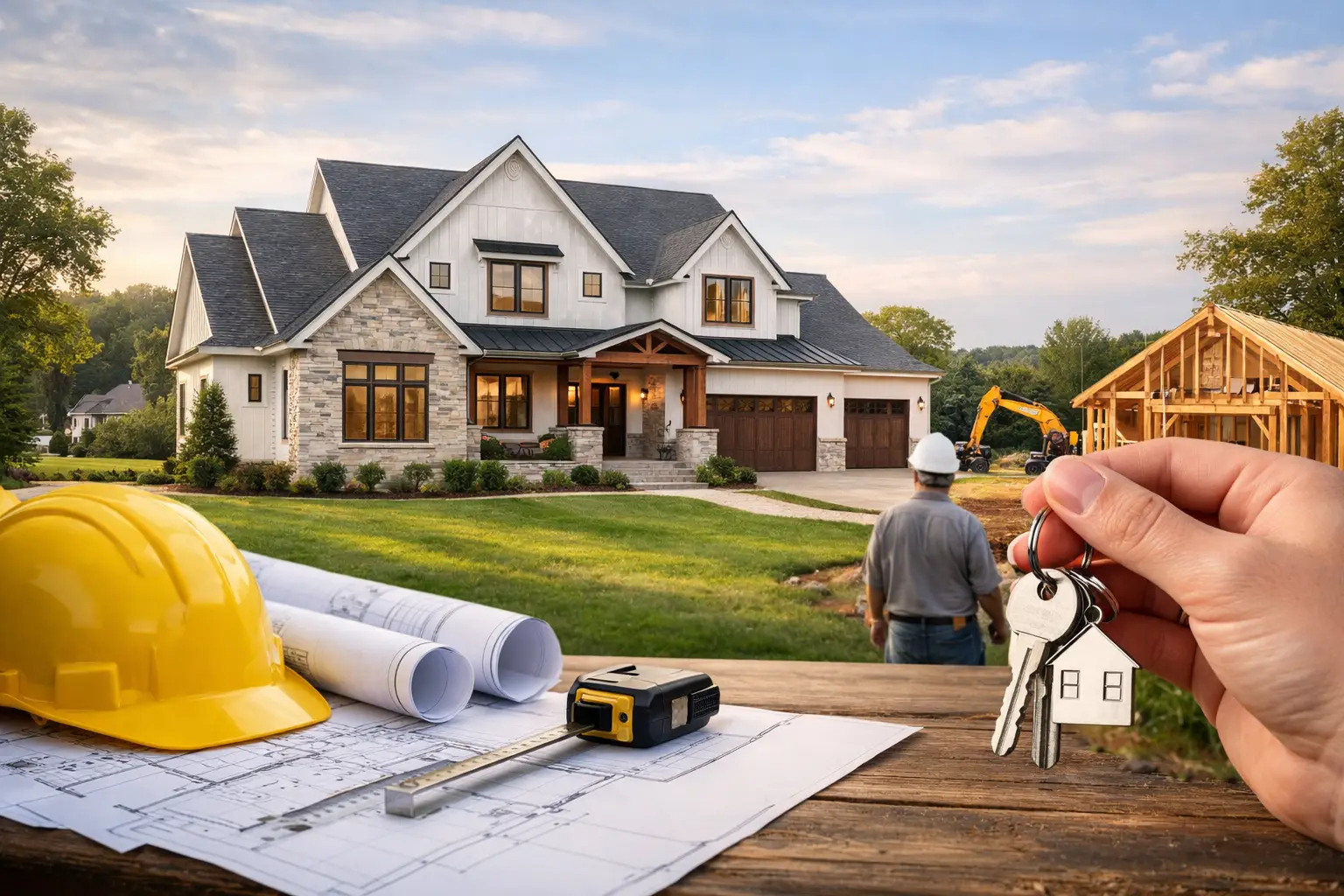
A custom home in the Philadelphia suburbs is never just about square footage. It is about how your family moves through the kitchen on a school morning, how natural light reaches the living room in winter, and whether the home still fits ten or fifteen years from now. When you start looking for a custom home builder Philadelphia suburbs homeowners can rely on, those practical details matter as much as finishes and floor plans.
This market asks more of a builder than many people expect. The suburbs around Philadelphia include established neighborhoods, historic districts, wooded lots, narrow in-town parcels, and communities with strict township requirements. Building well here takes more than construction knowledge. It takes planning, coordination, and the ability to guide clients through a process that affects budget, timeline, design decisions, and long-term value.
What sets a custom home builder in Philadelphia suburbs apart
A strong custom home builder in Philadelphia suburbs understands that local building conditions shape every project. Soil conditions, stormwater rules, utility access, setback requirements, and neighborhood character all influence what can be built and how efficiently it can move forward. A plan that looks perfect on paper can become expensive quickly if those realities are missed early.
That is why the best custom home experience starts before construction begins. Site review, feasibility, design coordination, and budgeting should happen together, not as disconnected steps. When those pieces are aligned from the start, clients avoid many of the surprises that create stress later.
There is also a design expectation in this region. Homeowners in places like the Main Line, Chester County, Montgomery County, and Bucks County often want a home that feels tailored rather than trendy. They may want modern function inside a classic exterior, or they may want to preserve architectural character while introducing open layouts, better energy performance, and more refined finishes. A builder needs to respect both the style of the area and the daily realities of modern living.
Custom home builder Philadelphia suburbs: what to look for first
The first thing to look for is not a photo gallery. It is process. Beautiful work matters, but the path to that result matters just as much. A custom home is a major investment, and the quality of communication behind the walls is often as important as the quality of what ends up on them.
Start by asking how the builder handles pre-construction. You want clarity on scope, budget development, design collaboration, permitting, and construction management. If the answers are vague, the project will likely feel vague later too. A dependable builder should be able to explain who is responsible for what, when major decisions need to be made, and how changes are managed once work begins.
Next, pay attention to whether the builder can think beyond a standard new build. In the Philadelphia suburbs, many custom homes involve demolition, additions to existing structures, infill construction, or work on properties with unusual constraints. Builders with broader design-build and renovation experience tend to navigate these variables more confidently because they are used to solving complex field conditions, not just following a standard set of plans.
Then consider craftsmanship in a broader sense. Good craftsmanship is not limited to trim details and cabinetry. It shows up in framing accuracy, moisture management, mechanical planning, window placement, and the way materials transition from one space to another. Those choices affect durability, comfort, maintenance, and the feel of the home every day.
Why an all-in-one process matters
One of the biggest frustrations in custom home construction is handoff failure. The designer blames the builder. The builder points to the drawings. The homeowner gets caught in the middle while costs shift and decisions stall. That is why many clients prefer a single team that can manage design, construction, and interior planning under one roof.
An integrated approach creates accountability. Instead of coordinating multiple firms on your own, you have one point of contact and one team responsible for aligning vision, budget, and buildability. That does not mean every decision becomes easy. It does mean the process is more organized, more transparent, and less likely to drift off course.
This is especially valuable for clients building a forever home or investing in a higher-end property. Those projects usually involve more custom detailing, more product decisions, and more opportunities for scope creep. Without strong coordination, small choices can have outsized cost and schedule consequences.
A company like OSR Builders brings value here by combining construction management, design-build capability, and interior design thinking into one client experience. For homeowners who want both craftsmanship and guidance, that structure can make a demanding project feel much more manageable.
The trade-offs every homeowner should understand
Custom building comes with freedom, but also with trade-offs. The more tailored the home, the more decisions need to be made. That can be exciting, but it can also be draining if the process is not organized well.
Budget is the most obvious example. Many homeowners begin with a vision shaped by online inspiration or by homes in other regions, then realize that local labor, site work, township requirements, and finish expectations create a different financial picture. A trustworthy builder does not simply say yes to every idea. They help prioritize what matters most and show where spending adds real value.
Timeline is another area where honesty matters. Building on a raw lot may look simpler than renovating an existing home, but permitting, utility coordination, weather, product lead times, and municipal inspections can still add time. In more established suburban areas, neighborhood constraints and local approvals may slow early phases. A realistic schedule is better than an optimistic one that falls apart halfway through.
There is also the question of resale versus personalization. Some clients want highly specific spaces like a golf simulator, prep kitchen, wine room, or first-floor multigenerational suite. These features can be excellent investments if they match the way your family lives. But they should be weighed carefully against market appeal, layout flexibility, and construction cost. The right builder helps you make those decisions with clear eyes.
Building for the way suburban families actually live
The strongest custom homes in the Philadelphia suburbs are designed around real life, not just presentation. Open-concept living remains popular, but many families also want separation between noisy and quiet zones, better storage, dedicated work areas, and outdoor spaces that function beyond a few summer weekends.
That is why thoughtful planning matters more than square footage alone. Mudrooms that actually hold gear, kitchens that support both entertaining and weekday routines, bathrooms with privacy where it counts, and basements designed with structure and moisture control in mind all make a difference. So do covered patios, outdoor kitchens, and flexible rooms that can adapt as children grow or parents move in.
Energy performance is becoming part of that conversation too. Better insulation, window selection, HVAC planning, and air sealing are not flashy upgrades, but they affect comfort every season. In this region, where summers are humid and winters can be unpredictable, a well-built home should feel consistent and efficient without sacrificing design.
Questions worth asking before you commit
Before choosing a builder, ask how early they get involved in lot evaluation and design planning. Ask how allowances, upgrades, and change orders are handled. Ask who communicates with you during construction and how often. Ask what happens when a budget issue appears or when an unforeseen site condition changes the scope.
You should also ask to see evidence of problem-solving, not just finished photography. Every custom project runs into challenges. What matters is whether the team handles them with transparency, urgency, and respect for your investment.
Finally, trust the quality of the conversation. Custom home building is a close working relationship that lasts months, sometimes longer. You want a builder who listens carefully, answers directly, and treats your project with the same seriousness they would expect for their own family.
A well-built home should feel intentional from the first sketch to the final walkthrough. If you are planning a custom build in the Philadelphia suburbs, choose a team that can balance design vision with accountability, craftsmanship with practicality, and ambition with clear guidance. That is what turns a complicated process into a home that feels right for years to come.