A deck should feel like an extension of your home, not another weekend obligation. When homeowners weigh wood versus composite decking, the right answer rarely comes down to looks alone. It comes down to how you plan to use the space, how much maintenance you are willing to take on, and what will serve your home well through Pennsylvania summers, rain, snow, and freeze-thaw cycles.
Both materials can create a beautiful outdoor living area. The stronger choice is the one that supports your budget, architecture, lifestyle, and long-term expectations from the beginning.
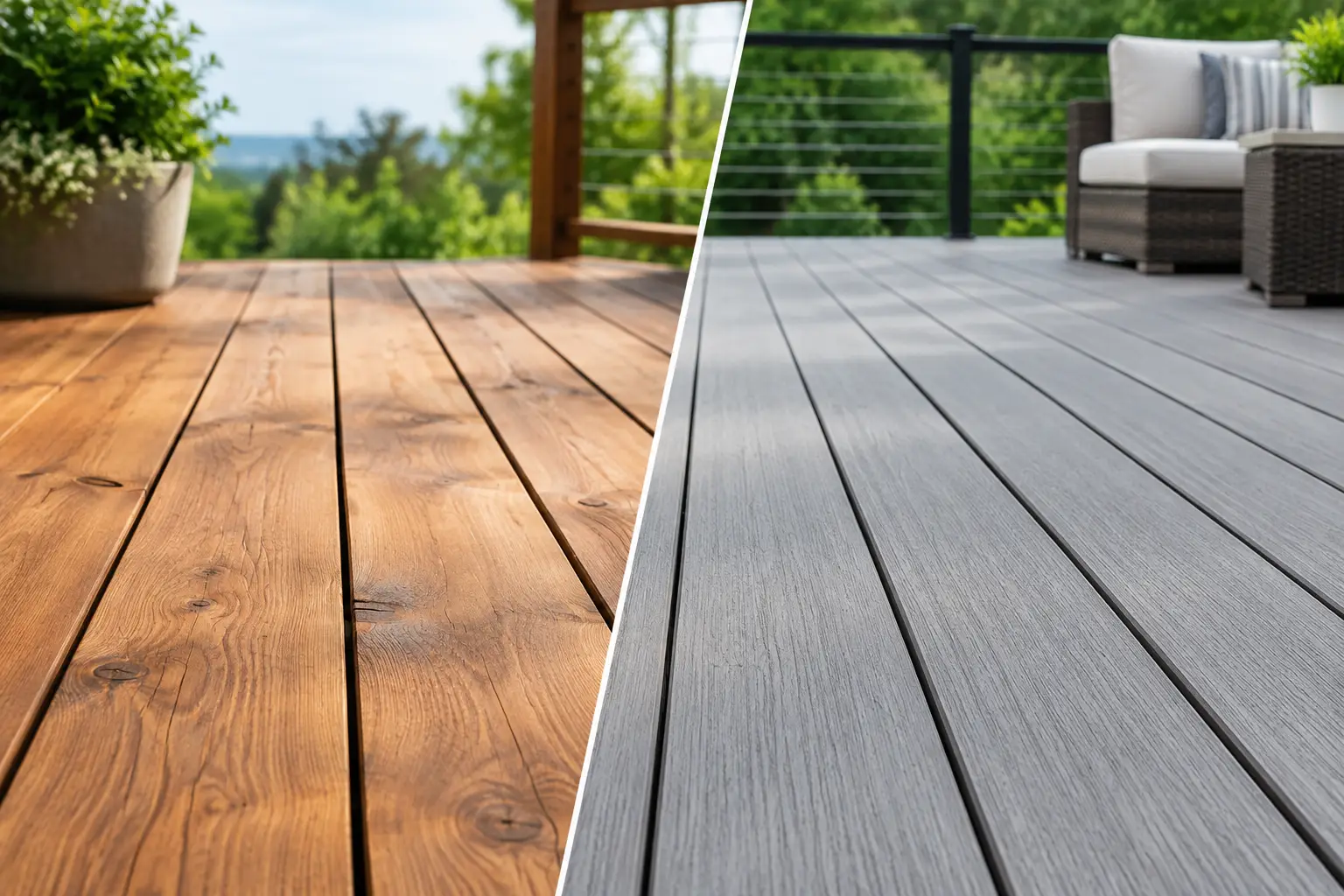
Wood Versus Composite Decking: The Core Difference
Natural wood is a traditional decking material valued for its warmth, character, and authentic texture. Common options include pressure-treated pine, cedar, redwood, and hardwoods such as ipe. Each species has a different price point, appearance, and maintenance requirement.
Composite decking is a manufactured board made from a blend of wood fibers and recycled plastic, often wrapped in a protective cap. It is designed to resist moisture, fading, staining, and insect damage better than conventional wood. It also comes in a wide range of consistent colors and grain patterns.
The decision is not simply natural versus manufactured. It is a question of upfront investment versus ongoing care, design flexibility versus material character, and how much time you want to spend preserving the finished result.
Upfront Cost and Long-Term Value
Wood usually has the lower initial cost, particularly pressure-treated lumber. For homeowners working within a defined renovation budget, that can make wood an appealing starting point. It can also be practical for a simple platform deck, a secondary entrance, or a project where the structure matters more than a highly finished surface.
Composite decking typically costs more at installation. The boards themselves are more expensive, and a quality installation may require manufacturer-approved fasteners, framing details, and careful spacing. A well-built deck is more than the material underfoot, so this is not an area where cutting corners pays off.
Over time, the cost gap can narrow. Wood needs regular cleaning, staining or sealing, and occasional board replacement. Composite requires far less routine treatment and tends to hold its appearance with basic washing. For a family planning to stay in their home for many years, that lower maintenance burden can make the higher initial investment easier to justify.
Value also depends on the home. A thoughtfully designed composite deck can complement a high-end remodel, outdoor kitchen, or pool setting with a polished, consistent finish. On a historic property or a home with traditional millwork and natural materials, real wood may be the better architectural fit. The goal is not to select the most expensive option. It is to select a material that belongs with the home.
Maintenance Is Often the Deciding Factor
Wood needs active care to remain attractive and structurally sound. Pressure-treated lumber should be allowed to dry appropriately before it is stained or sealed. After that, most wood decks benefit from regular cleaning and periodic refinishing. Leaves, standing water, pollen, and mildew can all affect the surface, especially in shaded areas.
That maintenance is not a flaw in wood. It is part of owning a natural product that responds to weather. Many homeowners enjoy the process and appreciate the ability to refresh the color or change the stain as their exterior evolves. Others would rather spend a Saturday enjoying the deck than preparing it for another coat of sealer.
Composite is the lower-maintenance choice, but it is not maintenance-free. Dirt, pollen, food spills, and debris still need to be cleaned. Proper drainage and airflow beneath the deck remain essential, and no decking material can compensate for poor framing or neglected water management. Still, composite generally avoids the sanding, staining, sealing, and splinter control associated with wood.
Durability in Pennsylvania Weather
The greater Philadelphia area puts outdoor materials through a full range of conditions. Strong sun, summer humidity, heavy rain, ice, snow, and seasonal movement all matter when planning a deck.
Wood can perform very well when it is properly selected, installed, and maintained. However, it is more vulnerable to checking, cupping, splitting, rot, and insect activity over time. The risk rises when boards stay damp, ground clearance is inadequate, or the deck receives limited sunlight.
Composite boards are engineered to resist many of those issues. Capped products are especially effective at resisting moisture and surface staining. They will not rot like wood, and they do not become food for insects. This makes composite a strong option for low-lying decks, shaded backyards, and homes where consistent maintenance may be difficult.
There are trade-offs. Composite can expand and contract with temperature changes, which is why installation details and spacing are so important. Some darker colors can become noticeably warm in direct sunlight. Wood can warm up too, but the surface temperature and barefoot comfort of a specific product should be considered if the deck will surround a pool or receive afternoon sun.
Appearance, Character, and Design Options
No manufactured board fully duplicates the variation of real wood. Natural grain, knots, and subtle color changes give a wood deck a character that many homeowners prefer, particularly on farmhouse, Colonial, Craftsman, and historic-style homes. Wood can also be stained in a custom tone, which offers flexibility when coordinating with siding, brick, stone, or trim.
Composite has made significant progress in appearance. Higher-quality boards offer nuanced color variation, embossed grain patterns, concealed fastening systems, and coordinated trim, rails, and lighting details. For contemporary homes and refined outdoor living spaces, that consistency can look intentional and elevated.
The surrounding design should guide the choice. A broad deck with an outdoor kitchen, dining zone, built-in seating, and covered roof structure may benefit from the clean, durable finish of composite. A smaller porch or garden-facing deck may call for the warmth and adaptability of wood. Railings, stairs, skirting, drainage, and lighting deserve the same attention as the deck boards because they shape both the finished appearance and the daily experience.
Do Not Overlook the Structure Below
Decking boards are the visible finish, but the framing carries the project. Whether you choose wood or composite, the structure should be designed for the intended use, properly flashed at the house, supported by appropriate footings, and built with a clear plan for drainage.
Composite boards can last for decades, which makes it especially important that the framing beneath them is built to the same standard. Replacing a failing structure under a relatively new deck surface is an expense no homeowner wants to face. Details such as joist spacing, ledger attachment, fasteners, and water protection affect safety and longevity far more than many people realize.
For larger decks, elevated spaces, outdoor kitchens, roofed structures, or projects involving complicated grades, design and construction should work together from the outset. A coordinated plan helps prevent costly revisions and ensures the finished deck performs as well as it looks.
Which Material Is Right for Your Home?
Choose wood if you value natural character, want the lowest initial material cost, enjoy the option to alter the finish over time, and are prepared for regular upkeep. It can be an excellent choice when the species, finish, and construction details are matched carefully to the site.
Choose composite if you want a more predictable appearance, reduced maintenance, strong moisture resistance, and a long-term outdoor surface that supports frequent entertaining and everyday family use. It is particularly compelling for homeowners who see the deck as part of a larger investment in outdoor living.
At OSR Builders, we approach decking as part of the whole property rather than a standalone feature. The best material is the one that works with your home’s architecture, the way your family gathers, and the level of care you want the space to require. A clear plan at the design stage makes it easier to build an outdoor space you will be happy to step into season after season.
Before selecting a board color or comparing samples, spend a few minutes thinking about your ideal Saturday at home. If it includes staining railings and replacing weathered boards, wood may be a satisfying fit. If it includes coffee outside, a full table of guests, and no maintenance checklist waiting nearby, composite may earn its place in the plan.