The difference between a beautiful outdoor kitchen and a frustrating one usually shows up after the first season. Cabinet doors swell, counters stain, appliances sit too close together, or the layout never quite works when family and friends are over. If you have searched for an outdoor kitchen builder near me, you are not just looking for someone to install a grill. You are looking for a contractor who can design, coordinate, and build a space that performs as well as it looks.
In the Philadelphia metro area, outdoor living projects have become more ambitious. Homeowners are extending entertaining spaces, improving resale value, and treating backyards as a real part of the home rather than an afterthought. That shift matters because an outdoor kitchen is not a simple add-on. It often involves masonry, framing, utilities, drainage, hardscaping, lighting, and finish selections that all need to work together.
What an outdoor kitchen builder near me should actually handle
A true outdoor kitchen builder should be able to do more than assemble components. The right team understands how design decisions affect construction, how site conditions affect cost, and how each trade needs to be coordinated from start to finish.
That includes the layout itself, but it also means planning for gas, electric, water, drainage, ventilation, weather exposure, and traffic flow. A good-looking setup can still be a poor build if the grill throws heat directly at seating, the refrigerator struggles in direct sun, or the countertops have no protected landing space near cooking zones.
This is where full-service project management becomes valuable. When one team is coordinating design, budgeting, permitting, scheduling, and construction, fewer details fall through the cracks. For homeowners investing in a custom outdoor space, that kind of accountability is often the difference between a smooth project and a drawn-out one.
Why local experience matters
When people search for an outdoor kitchen builder near me, proximity is only part of the equation. Local experience matters because building outdoors in southeastern Pennsylvania means dealing with freeze-thaw cycles, rain exposure, drainage concerns, seasonal movement, and township-level permit requirements.
A builder who works regularly in this region should understand which materials hold up, how to detail surfaces and structures for long-term performance, and what site preparation is needed before any finish work begins. Bluestone may look exceptional, but it needs the right substrate. Stainless appliances may be rated for outdoor use, but placement still matters if they are exposed to heavy weather. Pergolas, roofs, and covered areas may improve comfort, but they also affect lighting, ventilation, and utility planning.
Local knowledge also tends to improve expectations around timeline and budget. Experienced builders know where hidden costs usually appear, whether that is grading, utility runs, retaining work, or integrating the kitchen with an existing patio or deck.
The signs of a builder worth hiring
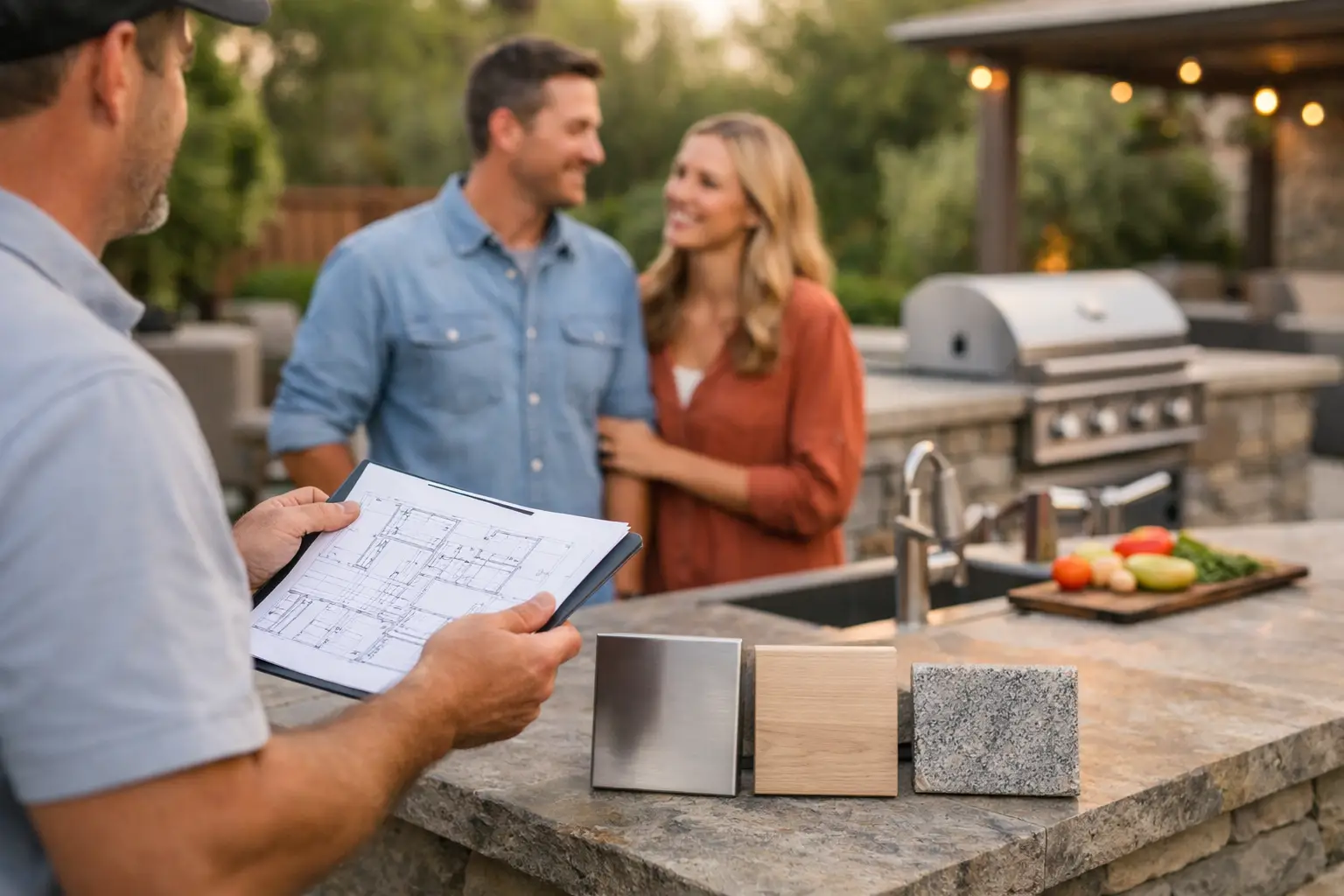
Homeowners often compare bids first, but the better comparison starts with process. A reliable builder asks thoughtful questions before talking numbers. They want to know how you live, how often you entertain, whether the kitchen is meant for quick family dinners or large gatherings, and what level of maintenance you are comfortable with.
A strong builder should also be clear about scope. Are they handling the patio extension, covered structure, lighting, and utility work, or only the kitchen island itself? Are they offering design guidance on finishes and appliances, or expecting you to source everything independently? Those details affect both price and responsibility.
You should also expect direct communication. Outdoor kitchens involve moving parts, and homeowners should know who is managing the job, who their main contact is, and how decisions will be documented along the way. Confidence is not about sales language. It comes from organized planning, realistic recommendations, and consistent follow-through.
Questions to ask before you sign
The best questions are the ones that reveal how a builder thinks. Ask how they approach layout planning, drainage, utility coordination, and material selection. Ask what products they recommend for this climate and what trade-offs come with each option.
You should also ask how the project will be phased. Some outdoor kitchen builds are straightforward, while others involve demolition, grading, concrete work, cabinetry, stone, roofing elements, and appliance installation. If the builder cannot explain the sequence clearly, the project may feel disjointed once work begins.
It is also worth asking how they handle changes. Nearly every custom project involves at least a few adjustments once details are finalized or site conditions are uncovered. A dependable contractor has a clear process for pricing and approving changes rather than handling them casually in the field.
Design choices that affect daily use
Outdoor kitchens tend to be judged by appearance first, but function is what determines whether you enjoy using them. The layout should support movement between prep, cooking, serving, and seating without creating bottlenecks.
That may mean keeping refrigeration close to entertaining zones while separating hot cooking surfaces from gathering areas. It may mean adding storage where serving pieces actually need to go, or incorporating trash pull-outs so cleanup is easier. In some homes, a sink is worth the added utility cost. In others, that budget may be better spent on refrigeration, counter space, or overhead cover.
Material selection matters just as much. Natural stone, tile, stainless steel, concrete, and specialty outdoor cabinetry can all work well, but not every material fits every use case. Some clients want a high-end architectural look and are comfortable with regular upkeep. Others want a durable, low-maintenance kitchen that handles weather with minimal attention. There is no single right answer. The right answer depends on how you plan to live with the space.
Budgeting for the full project, not just the island
One of the most common mistakes in outdoor kitchen planning is underestimating the total scope. Homeowners often budget for the visible features first, then get surprised by the cost of utilities, site prep, permits, or supporting hardscape work.
A builder with design-build experience can help you see the whole picture early. That means understanding whether the existing patio can support the kitchen, whether electrical service needs to be upgraded, whether drainage improvements are needed, and whether the kitchen should be built in phases.
Phasing can be a smart approach when done intentionally. For example, you might build the core kitchen and utility infrastructure now, then add a pergola, fire feature, or expanded seating area later. The key is planning for those future additions upfront so the first phase does not limit the second.
Why coordination matters more than most homeowners expect
Outdoor kitchens sit at the intersection of design and construction. The visual side gets the attention, but the technical side protects the investment. If measurements are off, appliances may not fit properly. If utility locations are rushed, the layout can suffer. If the finished elevations are not coordinated with adjacent patios or steps, the whole space can feel pieced together.
That is why many homeowners prefer working with one accountable partner rather than juggling separate designers, installers, and specialty trades. A coordinated team can balance aesthetics, budget, and constructability from the beginning instead of trying to fix problems later.
For projects that involve patios, decks, additions, or full backyard transformations, that integrated approach becomes even more valuable. A well-built outdoor kitchen should feel connected to the home, not dropped into the yard as a standalone feature.
Choosing a builder with staying power
An outdoor kitchen is exposed to weather, movement, heat, moisture, and heavy use. The builder you hire should be thinking beyond reveal-day photos. They should care about structural integrity, finish durability, and long-term serviceability.
That mindset usually shows up in the small details – proper substrate preparation, clean utility planning, quality control during installation, and honest conversations about what will age well and what may require more maintenance. It also shows up in how they treat the client relationship. The right builder is not trying to win the job with the lowest number. They are trying to deliver a finished product they can stand behind.
For homeowners who want a custom outdoor space with thoughtful design, dependable communication, and craftsmanship that lasts, working with a full-service team like OSR Builders can simplify a process that otherwise becomes fragmented fast.
The best outdoor kitchens do more than elevate a backyard. They make the home work better, gather people more naturally, and hold up to real life long after the project is complete.