
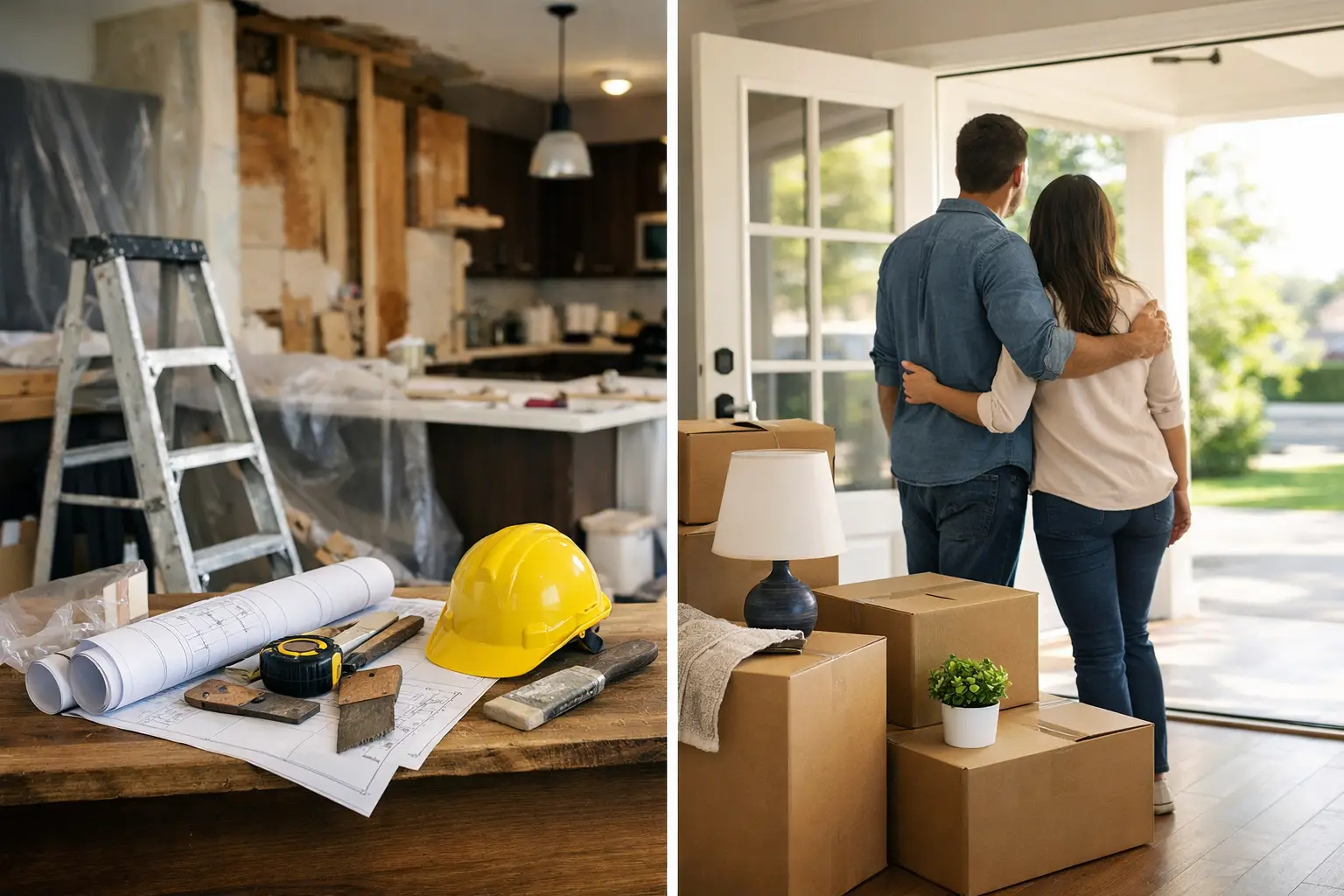
A cramped kitchen at 6:30 p.m., bedrooms that no longer fit the family, and a basement full of things with nowhere else to go can make a house feel suddenly too small. The question of remodeling versus moving to a bigger home often begins there. But square footage is only one part of the decision. The better choice depends on what is not working, what you love about where you live, and whether your current property can support the life you want next.
For homeowners across the greater Philadelphia area, this is rarely a simple cost comparison. Moving means entering a competitive market, giving up a neighborhood you may value, and taking on the cost and disruption of a new purchase. Remodeling can preserve what is already working while changing the spaces that no longer serve your family. It can also reveal structural limitations, zoning considerations, and project costs that need honest attention before work begins.
Remodeling vs Moving to a Bigger Home: Start With the Real Problem
Before looking at listings or sketching an addition, identify the source of the frustration. A home can feel too small because it lacks square footage, but it can also feel inefficient because its layout no longer matches daily life.
If the kitchen is isolated from the living area, the family room is undersized, or a finished basement could become a work-from-home suite, a thoughtful remodel may solve the problem without changing your address. Opening a wall, reworking the first-floor plan, finishing lower-level space, or building an addition can create meaningful function where you already have roots.
Moving may be the better answer when the limitations are fundamental. A property on a small lot may not have room for an addition. A split-level home may be difficult to adapt for aging in place. If you need a different school district, a shorter commute, acreage, or a truly different style of living, remodeling cannot provide those changes.
The most useful early question is not, Can we make this house bigger? It is, Can this home become the right home for the next 10 to 15 years?
Compare the Full Cost, Not Just the Construction Budget
Homeowners sometimes compare a remodeling proposal to a down payment and assume moving is less expensive. That is not the full picture. A move comes with a sale, purchase, loan costs, inspections, potential repairs requested by buyers, moving expenses, and the possibility that the new home still needs updates.
A larger home may also bring higher property taxes, utility costs, insurance, maintenance demands, and furnishing expenses. In many established Pennsylvania neighborhoods, buyers find that a bigger house with the right location still has an outdated kitchen, baths, or mechanical systems. The move can become both a purchase and a renovation project.
Remodeling has its own financial realities. A quality addition, whole-home renovation, or structural reconfiguration requires careful design, permits, engineering when needed, and a realistic contingency for conditions uncovered during construction. The right budget accounts for the finished result, not only the visible materials.
Still, remodeling can be a strong value when it adds usable space, improves the home’s flow, and protects the equity you have already built. It also lets you choose where to invest. You might prioritize a kitchen and family room addition now, then renovate secondary bathrooms later. That level of control is harder to achieve when a home purchase requires every cost at once.
Consider Your Equity and Borrowing Position
Your existing mortgage matters. Homeowners with a favorable interest rate may hesitate to replace it with a more expensive loan, even if they qualify for a larger purchase. Depending on your financial situation, using home equity to fund a renovation may preserve a loan structure that already works for your household.
That does not mean financing a remodel is automatically the better route. Review your monthly payment, available equity, long-term plans, and total project investment with qualified financial and real estate professionals. A construction team can help define the project scope and likely costs, but the financial decision should be based on your complete picture.
Think About Location as an Asset
A home is more than the building. It is the drive to work, the walkability of the neighborhood, nearby family, familiar schools, and the relationships built over years. Those factors have value that is difficult to place on a spreadsheet.
If you enjoy your street, have a functional commute, and want to remain in the same community, remodeling can offer the rare opportunity to improve the house without leaving the life around it. An addition can provide the primary suite, larger kitchen, mudroom, or home office that makes staying feel like a fresh start.
On the other hand, location can be the reason to move. If your property lacks privacy, the lot cannot accommodate the expansion you need, or your priorities have shifted toward a different community, a renovation may only delay the inevitable. It is better to recognize that early than to make a major investment in a home that will still feel wrong afterward.
How Much Disruption Can Your Family Handle?
Both choices are disruptive, just in different ways. Moving compresses the work into a concentrated period of searching, negotiating, packing, closing, and settling into a new home. It can be emotionally draining, especially when timing is tied to school schedules or a job change.
A major remodel requires living through construction or temporarily relocating, depending on the scope. Dust control, work hours, access to kitchens and bathrooms, and site safety need to be planned carefully. For a whole-home renovation, it may be more practical to live elsewhere during the main construction phase. For an addition or basement renovation, many families can remain in the home with clear expectations and a well-managed schedule.
The key is not to assume one option will be easy. Ask which disruption is more manageable for your household and which one leads to the better long-term result.
What Can Your Current Home Actually Become?
This is where a professional feasibility review matters. A promising idea on paper may be limited by setbacks, easements, lot coverage rules, structural conditions, utility locations, or the configuration of the existing home. Conversely, a house that seems too small may have significant untapped potential.
A design-build approach brings design, construction planning, and budget discussion together early. Rather than falling in love with a concept before understanding its cost and feasibility, you can evaluate practical options side by side. Perhaps a rear addition creates the open kitchen and family room you need. Perhaps finishing the basement adds a guest suite, gym, and recreation area without changing the footprint. Or perhaps the cost of extensive structural work points clearly toward moving.
At OSR Builders, the goal is not to steer every homeowner toward construction. It is to provide the coordinated planning, craftsmanship, and straightforward communication needed to make a sound decision. A well-defined project begins with an honest conversation about the home, the property, the budget, and the vision behind the investment.
A Simple Decision Framework
Remodel when you love the location, your home has a realistic path to better function, and the investment supports how long you plan to stay. An addition or whole-home renovation is especially compelling when the issue is layout, usable space, outdated finishes, or a missing feature such as a first-floor suite or dedicated office.
Move when the location no longer fits, the property cannot support the changes you need, or the renovation required would still leave you compromising on major priorities. Moving can also make sense when you want a substantially different home type, lot size, or community.
If the answer remains unclear, do not rush toward a listing or a demolition plan. Start by documenting how your household uses the home now, what must change, and what would be nice to have. Then explore both paths with real numbers and a realistic view of timing.
The best next step is the one that gives your family room to live well, not simply more room to fill.